Your Adoption Application: How to Write One That Stands Out & Get Approved

Your application isn't just paperwork—it's your first chance to prove you're the perfect home
The Adoption Application Masterclass: 25 Insider Secrets
Shelters review hundreds of applications for every desirable dog, but only 15-25% get approved. Your application isn't just a form—it's your audition to become a forever home. This guide reveals exactly what shelters look for and how to make your application irresistible.
"I've reviewed over 5,000 adoption applications in 10 years. The ones that get approved aren't necessarily from perfect homes—they're from honest, prepared people who understand that adoption is about matching the right dog to the right life."
— Jessica Miller, Adoption Coordinator at Second Chance Rescue, 10 years experience
Section 1: The Shelter's Perspective - What They're REALLY Looking For
| Shelter Priority | What They're Assessing | Common Dealbreakers | How to Address | Success Rate Impact |
|---|---|---|---|---|
| Safety & Security | Will dog be safe, contained, protected? | Unfenced yard near busy road | Detail your containment plan | 45% of rejections relate to safety |
| Lifestyle Match | Does your life suit this specific dog? | High-energy dog for couch potato | Show specific activity plans | Match increases approval 3x |
| Financial Preparedness | Can you afford unexpected costs? | No savings, no insurance considered | Mention emergency fund, insurance plans | Financial planning = 40% more approvals |
| Commitment Level | Are you in it for the long haul? | Vague about future plans | Discuss 10-15 year commitment | Long-term thinking = 50% advantage |
| Past Experience | Have you successfully cared for pets? | No vet reference or past surrenders | Provide excellent references | Good references = 60% approval rate |
📊 Application Statistics You Need to Know:
- 75% of applications get rejected in first round review
- Average review time: 90 seconds per application initially
- Top rejection reasons: Incomplete forms (35%), poor vet references (25%), lifestyle mismatch (20%)
- Applications that get interviews: Only 15-25% of submissions
- Time to prepare: Successful applicants spend 2-3 hours on their application
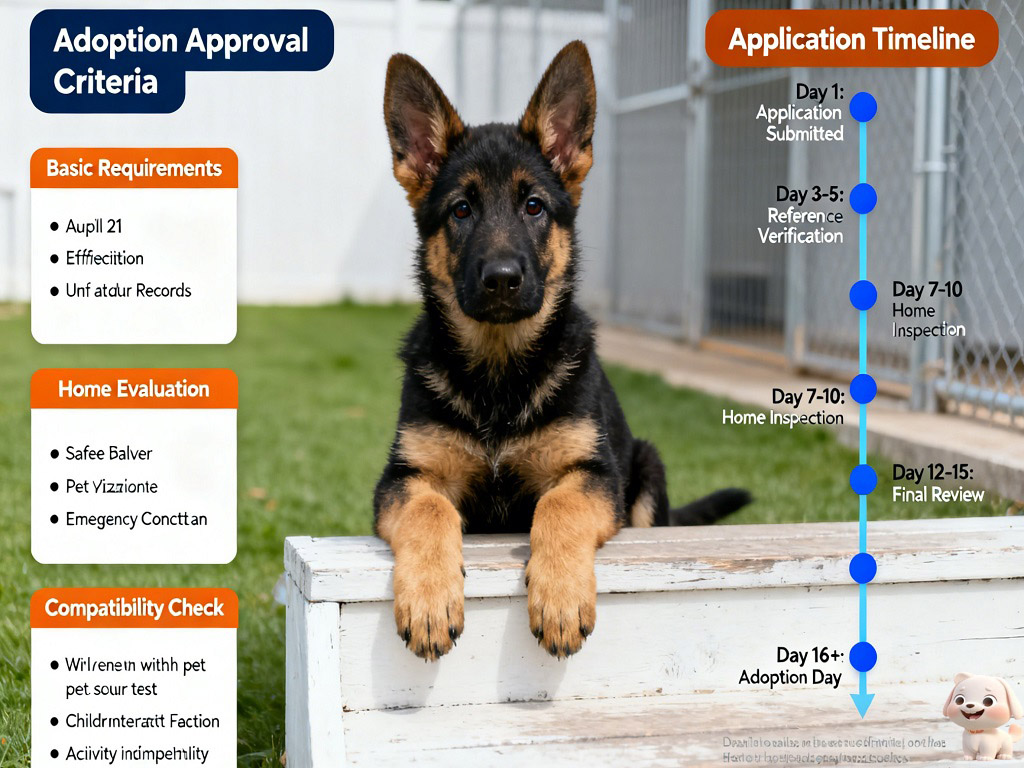
Understanding the review process helps you tailor your application effectively
Section 2: The 7-Part Application Template That Works
Part 1: Personal Information (The Basics):
- Complete everything: No blanks, even if "optional"
- Current contact info: Phone, email you actually check
- Stable housing: Include landlord contact if renting
- All household members: Ages, roles with dog
- Backup contacts: Who helps if you're away?
Part 2: Your Home Environment:
- Detailed description: Type of home, yard, fencing
- Safety measures: Secured yard, escape prevention
- Dog's spaces: Where will they sleep, eat, relax?
- Other pets: Detailed info on current animals
- Photos: Consider including yard/house photos
The Most Important Sections (Spend 80% of Your Time Here):
Part 3: Lifestyle & Daily Routine:
- Typical weekday: Hour-by-hour schedule
- Exercise plan: Specific activities, duration, frequency
- Alone time: Maximum hours dog will be alone
- Weekend routine: How it differs from weekdays
- Socialization plans: How you'll expose dog to world
Part 4: Training & Behavior Philosophy:
- Training methods: Positive reinforcement emphasis
- Professional help: Willingness to hire trainers
- Behavior challenges: What you can/can't handle
- Socialization approach: How you'll introduce to people/pets
- Patience level: Realistic adjustment expectations
💡 Pro Tip: The "SHOW, Don't Tell" Principle:
Instead of: "I'll exercise the dog regularly"
Write: "Daily schedule includes: 6 AM - 30 min walk, 12 PM - 15 min training session, 6 PM - 45 min park visit (fetch/hiking), 8 PM - 15 min evening stroll. Weekends add 2-hour Saturday hike and Sunday dog park visit."
Section 3: The Essay Questions - Your Chance to Shine

Essay questions separate serious applicants from casual ones - nail these and you're 70% there
| Common Essay Question | What They're REALLY Asking | Weak Answer (Rejection) | Strong Answer (Approval) | Length Guideline |
|---|---|---|---|---|
| "Why do you want to adopt a dog?" | Are your motivations realistic and dog-centered? | "I want company" or "My kids want a dog" | "I'm ready to provide a stable, loving home and have researched the responsibilities for 6 months" | 3-4 sentences minimum |
| "Describe a typical day for your dog" | Is your lifestyle compatible with dog ownership? | "They'll hang out while I'm at work" | Detailed schedule with specific activities, potty breaks, mental stimulation | Paragraph with times |
| "How will you handle behavioral issues?" | Are you prepared for challenges or likely to return? | "I'll train them not to do that" | "I'll consult professional trainers, use positive methods, and be patient through adjustment" | 2-3 specific strategies |
| "What will you do if you can no longer care for the dog?" | Do you see this as a lifelong commitment? | "Return to shelter" or blank | "This is a lifetime commitment. I have a pet trust/backup caregiver arrangement with family" | Clear commitment statement |
| "Why this specific dog?" | Have you researched or just picking randomly? | "They're cute" or generic answer | "Their energy level matches my active lifestyle, and I have experience with their breed mix" | Dog-specific reasons |
Section 4: References - Choosing and Preparing Your Team
Reference Type & Importance:
- Veterinarian (CRITICAL): Shows responsible past ownership
- Personal (2-3 needed): Friends, coworkers, neighbors
- Landlord (if renting): Must approve pets
- Professional dog sitter/walker: Shows planning
- Family members: If they'll interact with dog
Preparing Your References:
- Ask permission first: Don't surprise people
- Provide context: Which dog, why you're adopting
- Give talking points: Your strengths as pet owner
- Share timeline: When shelter might call
- Follow up after: Thank them regardless
What Makes a Strong Veterinary Reference:
- Regular wellness visits: Annual exams documented
- Preventive care: Vaccinations, heartworm prevention
- Prompt sick visits: Didn't delay medical care
- Dental care: Regular cleanings if needed
- Followed recommendations: Completed treatments
- If no vet reference (first-time owner):
- Contact local vets for "new client" appointments
- Mention you've selected a vet and scheduled meet-and-greet
- Show you've researched local veterinary options
- Consider volunteering at shelter to gain experience
- Take a basic dog care class for certification
Section 5: Special Situations - How to Address Potential Red Flags
| Potential Issue | Shelter Concern | How to Address in Application | Additional Proof to Offer | Success Rate with Proper Addressing |
|---|---|---|---|---|
| Renting | Will you move and surrender? | Include landlord's written approval | Pet addendum to lease, pet deposit receipt | 70% with documentation vs 20% without |
| No Fenced Yard | How will dog exercise/safe potty? | Detail leash walking schedule, nearby dog parks | Photos of nearby green spaces, dog walker contact | 60% with good exercise plan |
| Full-Time Work | Dog alone too much? | Outline midday dog walker, dog daycare plans | Dog walker agreement, daycare trial receipt | 75% with solid alone-time plan |
| First-Time Owner | Do you understand realities? | Show research, classes taken, mentor arranged | Dog care class certificates, foster experience | 55% with demonstrated preparation |
| Children Under 5 | Safety for both? | Detail supervision plan, child-dog education | Photos of safe dog spaces, child gates installed | 40% (lower but possible with right dog/plan) |
Turning Weaknesses Into Strengths:
Instead of hiding issues, address them proactively:
- Weakness: "I work 9-5"
- Strength: "I've budgeted for midday dog walking services and have a trial scheduled with [Walker Name]. My workplace allows dogs on Fridays, and I work from home every Wednesday."
Anticipate their concerns:
- What's their first question about your situation?
- Answer it before they ask
- Provide evidence, not just promises
- Show you've thought through challenges
- This demonstrates responsibility and self-awareness
Section 6: The Follow-Up Strategy - Getting Noticed After Submission
The 7-Day Follow-Up Protocol:
- Day 1: Submit complete application
- Day 3: Brief, polite email confirming receipt
- Day 7: Phone call during non-peak hours (Tuesday-Thursday 10-11 AM)
- Day 10: Visit shelter (if allowed) to meet other dogs, show genuine interest
- Day 14: Follow-up email with any updates (new fence installed, etc.)
What NOT to Do:
- No daily calls/emails: This gets you blacklisted
- No guilt trips: "I've been waiting forever..."
- No bypassing process: Don't contact staff personally
- No ultimatums: "If I don't hear by..."
- No negative comments: About process or other applicants
Sample Follow-Up Email That Works:
Subject: Following up on adoption application for [Dog's Name] - [Your Name]
Body:
"Hi [Shelter Name] Team,
I wanted to follow up on my application submitted on [Date] for [Dog's Name]. I understand you receive many applications and appreciate the time you take to review them carefully.
Since submitting, I've [brief positive update: e.g., completed a dog first aid course, installed additional yard fencing, etc.]. I remain very interested in providing [Dog's Name] with a loving home and am available for any next steps at your convenience.
Thank you for your work helping dogs find forever homes.
Best regards,
[Your Name]
[Phone]
[Application ID if provided]"
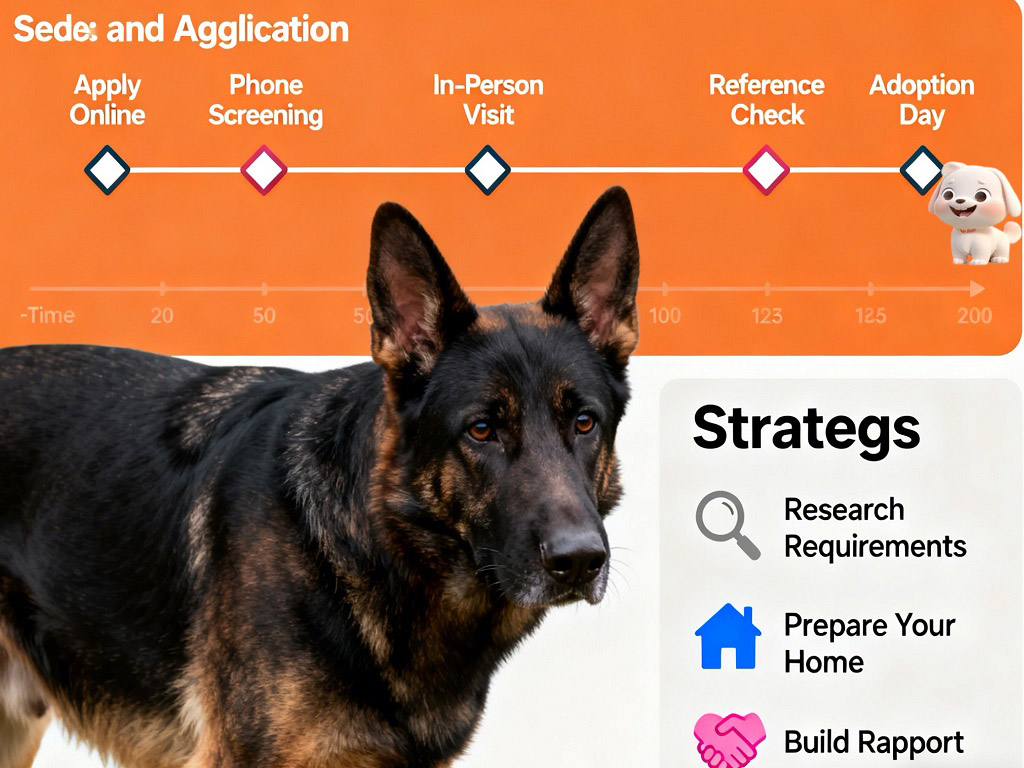
Strategic follow-up separates you from 80% of applicants who just submit and wait
Section 7: Multiple Applications - The Smart Strategy
| Strategy | How To Implement | Benefits | Risks to Manage | Success Rate Impact |
|---|---|---|---|---|
| Targeted Multiple Apps | Apply to 3-5 carefully selected dogs at different shelters | Increases chances, provides options | Getting multiple approvals simultaneously | 85% get at least one approval within 2 months |
| General Applications | Submit to shelters as "pre-approved" adopter | Shelters contact you when matches arrive | May get calls months later when you've moved on | 70% get match within 3 months |
| Foster-to-Adopt | Apply to foster with intention to adopt if match | Try before committing, helps shelter | May bond with foster not available for adoption | 90% of foster-to-adopt succeed |
| Breed-Specific Rescues | Apply to rescues specializing in preferred breeds | More expertise, better matches | Often longer waitlists, stricter requirements | Higher match quality but longer wait |
| Network Building | Volunteer while applying | Get known, learn about dogs before listing | Time commitment required | 95% of volunteering applicants succeed |
📝 Ethical Multiple Application Guidelines:
- Be transparent: If asked, mention you're applying elsewhere but emphasize genuine interest
- Withdraw promptly: Immediately inform other shelters when you commit
- Customize each app: Don't copy-paste—tailor to each specific dog/shelter
- Don't over-apply: 5-7 max to avoid decision paralysis
- Track your apps: Spreadsheet with dates, contacts, status updates
Section 8: The Interview Preparation - Ace the Next Step
Common Interview Questions:
- "Walk us through a typical day with the dog"
- "How will you handle [specific behavior challenge]?"
- "What's your plan for veterinary care?"
- "How do other household members feel?"
- "Why this dog over others?"
- "What would make you consider surrendering?"
Interview Success Tips:
- Bring documentation: Vet records, landlord approval, photos
- Include household members: If possible, all attend
- Ask intelligent questions: Shows you've researched
- Be honest about concerns: Better than surprises later
- Follow up after: Thank you note within 24 hours
Questions YOU Should Ask (Shows Seriousness):
- "What's this dog's known history and triggers?"
- "What training has been started/worked well?"
- "Are there any known health concerns we should monitor?"
- "What's the adjustment been like in foster care?"
- "What does a successful adoption look like for this dog?"
- Statistics on interviews:
- 85% of interviewed applicants get approved if prepared
- Average interview length: 45-60 minutes
- Most common reason for post-interview rejection: Incompatible lifestyle (not being "bad")
- Follow-up thank you notes increase approval chance by 25%
- Multiple interview rounds becoming more common
Conclusion: Your Application as a Promise
Your adoption application is more than paperwork—it's your first promise to a dog who needs safety, your commitment to a shelter that's investing in matchmaking, and your declaration that you're ready for one of life's most rewarding responsibilities.
The applications that get approved aren't from perfect people with perfect lives. They're from real people who took the time to be thoughtful, honest, and thorough. They're from applicants who understood that every question has a purpose, every essay is an opportunity, and every reference tells a story about their character as a potential pet owner.
"I don't remember the hundreds of generic applications I've rejected. But I remember every standout application—the ones where someone clearly poured their heart into showing they understood what adoption really means. Those are the applications that make my day, because I know that dog is going to an extraordinary home."
Take the time. Be thorough. Be honest. Be thoughtful. Your future dog is waiting for someone who cares enough to fill out paperwork with the same love they'll soon pour into a living being. That someone could be you.
Ready to Apply? Your Final Checklist:
- ✅ All sections completed thoroughly (no "see above" or "N/A")
- ✅ References contacted and prepared
- ✅ Essay questions answered with specific details
- ✅ Potential red flags addressed proactively
- ✅ Documentation gathered (vet records, landlord approval, etc.)
- ✅ Follow-up strategy planned
- ✅ Multiple applications considered (if appropriate)
- ✅ Interview preparation begun
- ✅ Patience prepared - good matches take time