Teach Your Dog Cool Tricks: Fetch Packages, Turn Off Lights, and Ring a Bell
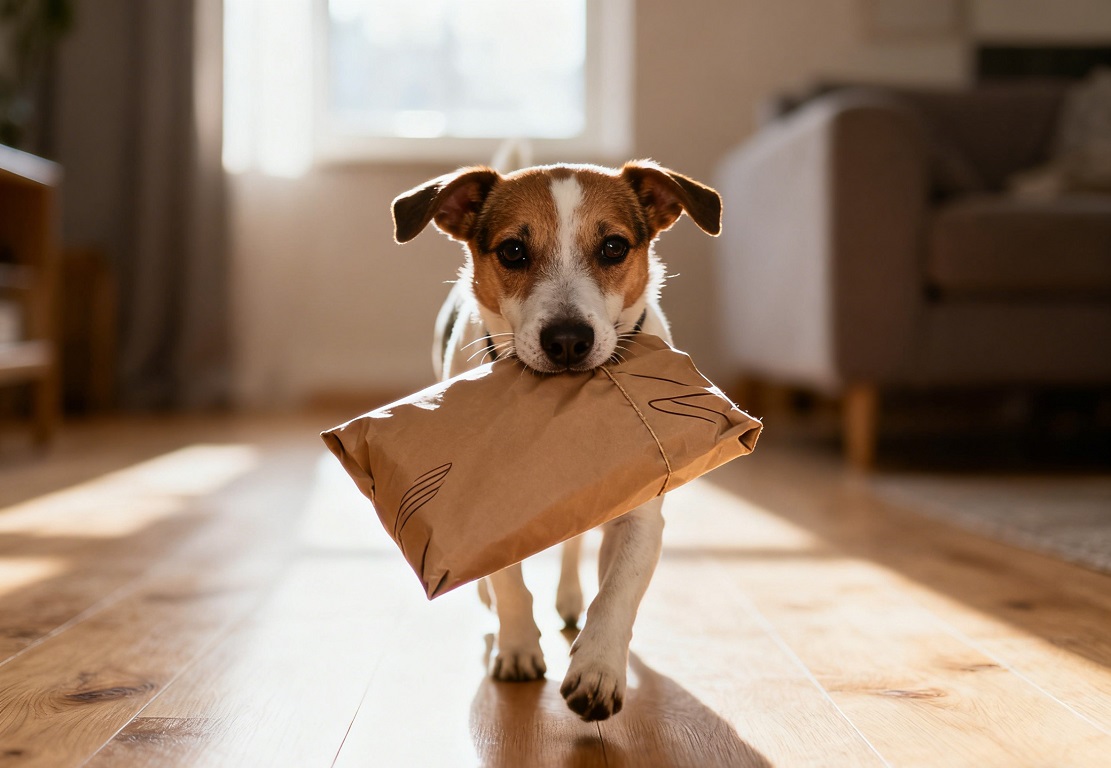
Transform your dog from pet to helpful household companion with these practical, impressive tricks
Transform Your Dog into a Helpful Companion: Advanced Trick Training Guide
Teaching your dog cool, practical tricks goes beyond basic obedience—it turns your pet into an engaged household member who can actually help with daily tasks. This comprehensive guide will walk you through teaching three impressive and useful tricks: fetching packages, turning off lights, and ringing a bell for communication.
"When you teach your dog practical skills, you're not just training—you're building a partnership. These tricks transform your dog from a passive pet into an active, thinking participant in family life."
— Dr. Emily Rodriguez, Canine Behavior Specialist
Training Fundamentals: Preparing for Advanced Tricks
Essential Prerequisites for Success:
- Solid Foundation: Your dog should know basic commands (sit, stay, come)
- Clicker Familiarity: Marker training speeds up complex trick learning
- Patience: These tricks may take 2-4 weeks to master completely
- Appropriate Rewards: High-value treats for complex tasks
- Short Sessions: 10-15 minutes daily, not marathon training
- Realistic Expectations: Adjust for your dog's age, breed, and personality
Trick #1: Fetch Packages - The Helpful Delivery Service
Why Teach Package Fetching:
This practical trick teaches your dog to identify and retrieve specific items, perfect for getting lightweight packages from the doorstep or helping with small household items.
Step-by-Step Training:
- Basic Fetch Foundation: Master retrieving a favorite toy first
- Object Discrimination: Teach "take it" with package-like items
- Add Weight Gradually: Start with empty boxes, add light items
- Location Training: Designate specific delivery spots
- Add Cue: Introduce verbal command "get the package"
- Real-World Practice: Use actual delivered packages (carefully)
- Proofing: Practice with different package types and locations
Safety Considerations:
- Weight Limits: Only fetch packages under 2-3 pounds
- Content Awareness: Check packages for dangerous contents first
- Delivery Path: Clear obstacles from delivery route
- Surface Safety: Avoid hot, cold, or slippery surfaces
- Health Check: Ensure no back or joint issues before training
Training Progression Timeline:
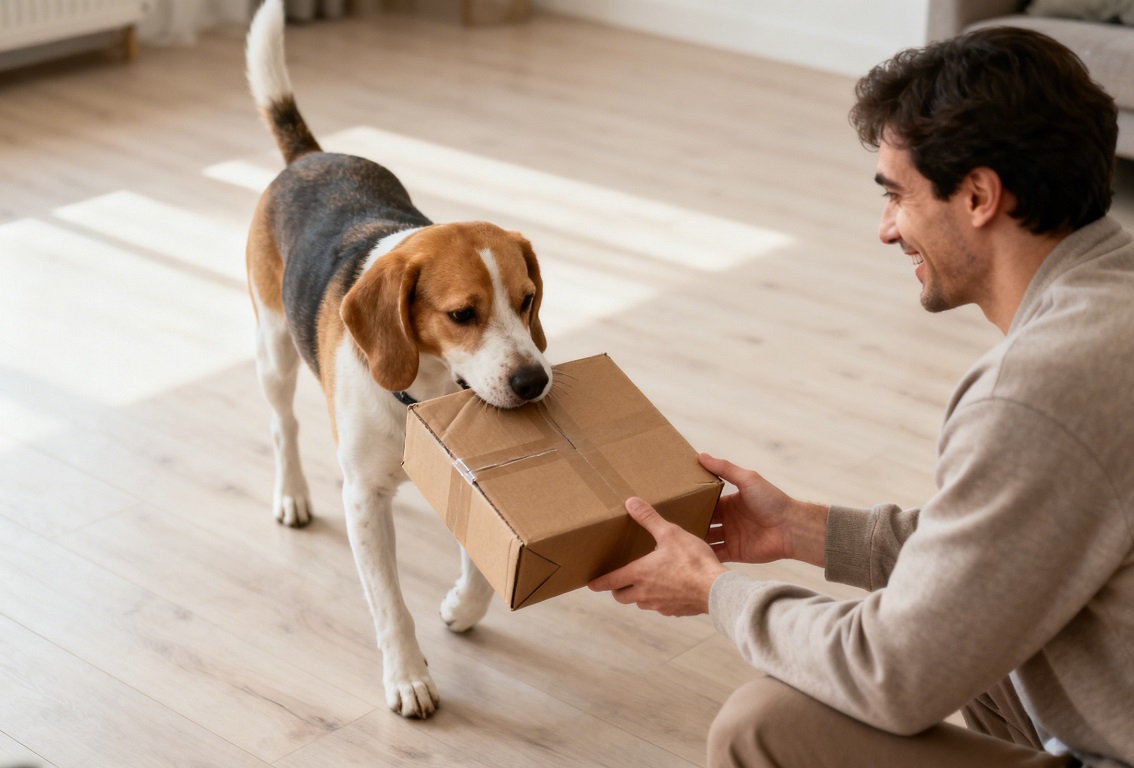
Gradual training helps dogs safely master package fetching, starting with light items and short distances
| Week | Skill Level | Package Type | Distance | Daily Practice |
|---|---|---|---|---|
| 1 | Foundation | Favorite toy only | 3-5 feet | 2x 5-minute sessions |
| 2 | Object Transition | Empty cardboard box | 5-10 feet | 2x 7-minute sessions |
| 3 | Delivery Training | Light packages (paperweight inside) | 10-15 feet | 2x 10-minute sessions |
| 4 | Real-World Application | Actual lightweight deliveries | Variable distances | Opportunistic training |
Trick #2: Turn Off Lights - The Eco-Friendly Helper
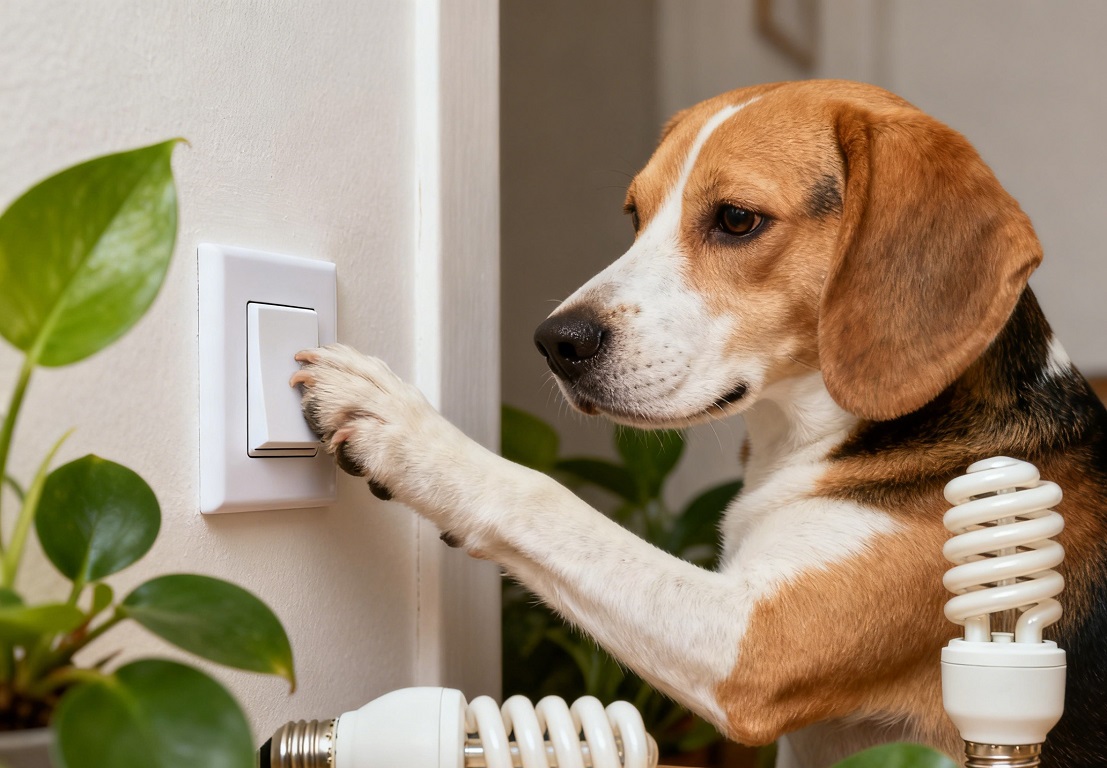
Safe light switch training requires proper equipment and supervision for both fun and safety
Why Teach Light Switching:
This impressive trick combines physical coordination with understanding cause-and-effect. It's perfect for dogs who enjoy using their paws or nose.
| Training Method | Best For | Step-by-Step Process | Success Tips |
|---|---|---|---|
| Nose Touch Method | Dogs who naturally nose-target | 1. Teach "touch" command 2. Apply to light switch plate 3. Add pressure requirement 4. Add verbal cue "lights out" |
Use clicker for precise timing, start with sticky notes as targets |
| Paw Target Method | Dogs who naturally paw or scratch | 1. Teach "paw" or "high five" 2. Target switch with paw 3. Add upward motion 4. Shape into flipping action |
Protect switch with plastic guard during training |
| Mouth Method | Dogs who carry items gently | 1. Teach "take" with rope toy 2. Attach rope to switch 3. Shape pulling action 4. Add cue "lights off" |
Only for rocker switches, ensure electrical safety |
Critical Safety Precautions:
- Electrical Safety First: Ensure switches are properly installed and undamaged
- Supervision Required: Never leave dog alone with access to light switches
- Height Considerations: Use only switches at appropriate height for your dog
- Switch Type: Best with rocker switches, not small toggle switches
- Reward Placement: Keep treats away from electrical outlets
Trick #3: Ring a Bell - The Communication System
Why Bell Training is Revolutionary:
This trick gives your dog a clear, non-destructive way to communicate their needs, reducing barking, scratching, and other unwanted behaviors.
Bell Selection Guide:
- Type: Jingle bells on rope, desk bells, or doorbell buttons
- Volume: Loud enough to hear, not startlingly loud
- Durability: Withstand regular use and occasional chewing
- Mounting: Easy access at dog's nose level
- Multiple Bells: Consider different bells for different needs
Communication Applications:
- Potty Signal: Bell by door for bathroom needs
- Play Request: Different bell for playtime
- Meal Alert: Bell in kitchen for food/water needs
- Attention Bell: Gentle way to request interaction
Step-by-Step Bell Training:
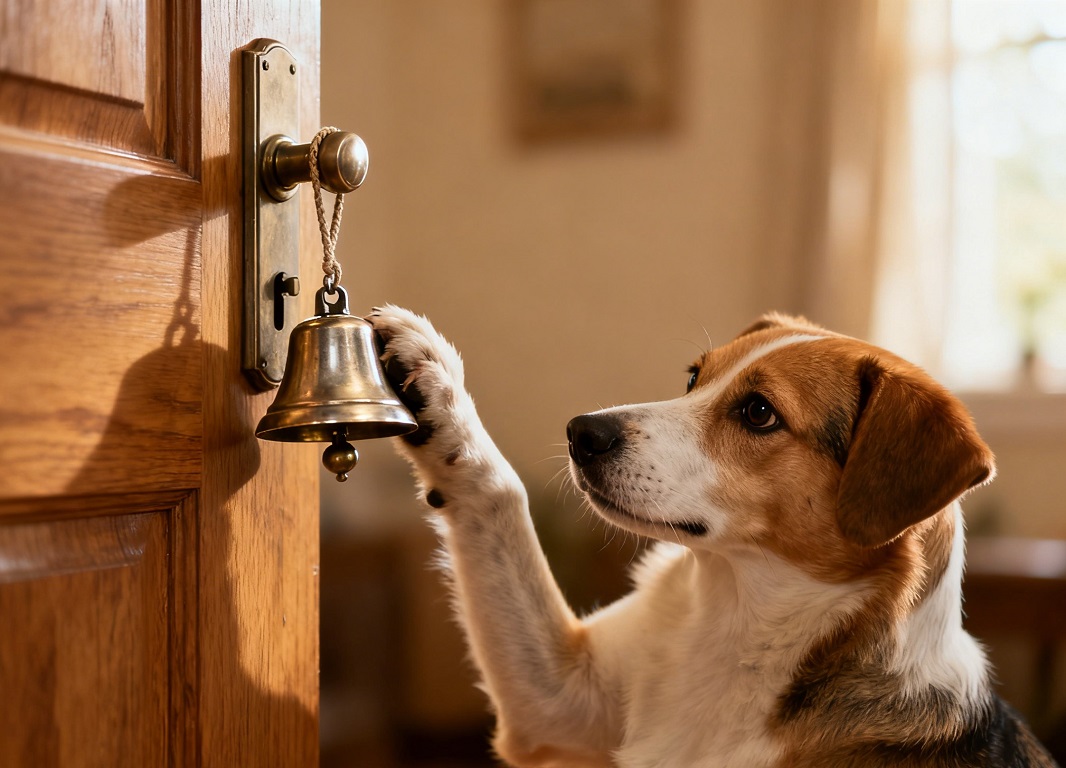
Bell training gives dogs a clear, non-destructive way to communicate their needs and requests
Phase 1: Association Building (Days 1-3)
- Introduce bell in neutral setting, let dog investigate
- Click/treat for any interaction with bell
- Shape toward actual ringing (nose/paw contact)
- Add verbal cue "ring bell" as action occurs
Phase 2: Purpose Connection (Days 4-10)
- Mount bell at appropriate location (door for potty)
- Before each desired activity, prompt bell ring
- Immediately provide access to activity (outside, food, etc.)
- Gradually wait for spontaneous ringing
Phase 3: Independent Use (Days 11-21)
- Respond consistently to every bell ring
- Phase out prompts, wait for initiation
- Practice in different contexts and locations
- Add additional bells for different purposes
Advanced Training Concepts: Chaining Behaviors
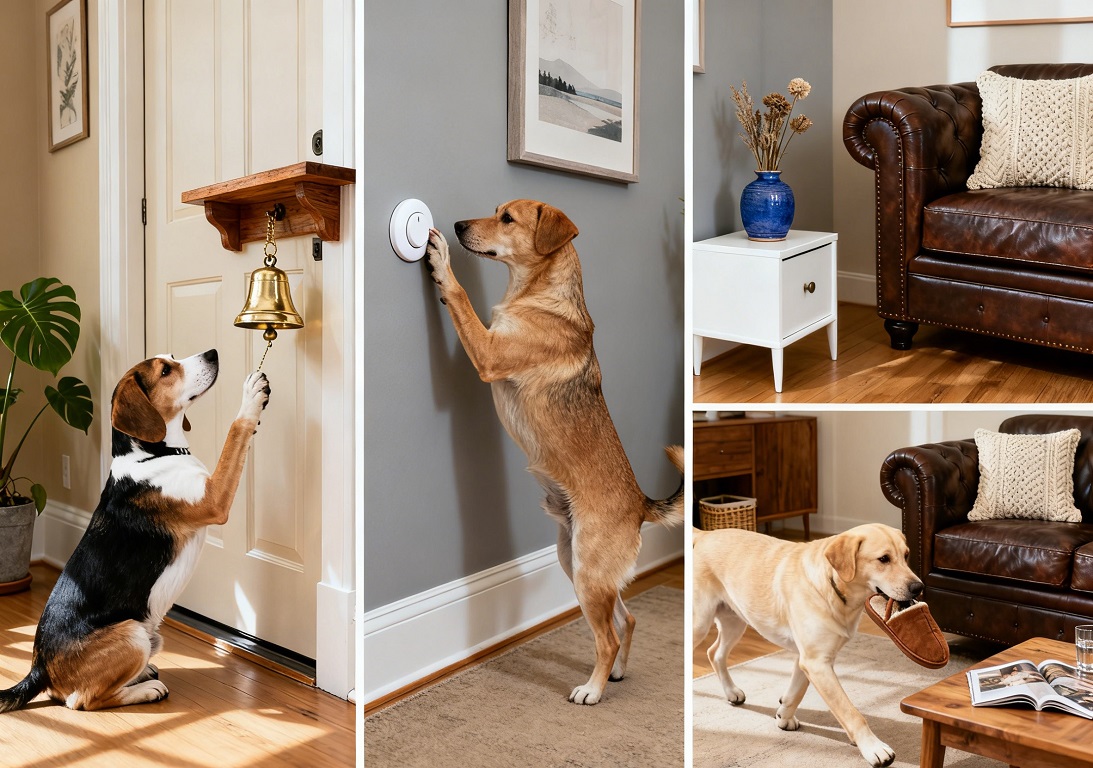
Advanced behavior chaining creates impressive routines that combine multiple useful skills into practical sequences
Creating Complex Behavior Chains:
Once individual tricks are mastered, you can chain them together for impressive sequences:
Example Chain: "Evening Routine"
- Dog rings bell when sun sets (learned association)
- Turns off living room lamp
- Fetches your slippers
- Turns on nightlight in hallway
Training Chained Behaviors:
- Backward Chaining: Teach last step first, work backward
- Forward Chaining: Teach first step, add subsequent steps
- Bridge Signals: Use intermediate cues between behaviors
- Variable Reinforcement: Reward sometimes at chain completion
Breed Considerations and Adaptations
| Breed Type | Best Trick Match | Adaptation Tips | Potential Challenges |
|---|---|---|---|
| Retrievers (Labs, Goldens) | Package fetching | Use natural retrieving instinct | May want to keep items instead of delivering |
| Herding Breeds (Collies, Shepherds) | Bell communication | Channel alertness into specific signals | May ring bell excessively without purpose |
| Terriers | Light switching | Use natural paw dexterity | May be too enthusiastic with switches |
| Toy Breeds | Adapted versions of all | Adjust heights, use smaller equipment | Physical limitations, need for adaptations |
| Sighthounds | Selective training | Focus on one trick, use high-value rewards | Lower motivation for repetitive tasks |
Troubleshooting Common Advanced Trick Problems
Problem: Dog performs trick perfectly at home but not elsewhere
Solution Strategy:
- Generalization Training: Practice in 5+ different locations
- Environmental Desensitization: Gradually add distractions
- Portable Equipment: Take training bells/switches to new places
- Re-establish Basics: Re-train from step one in new environment
Problem: Dog gets "stuck" on one trick element
- Break It Down: Return to simpler version of the trick
- Change Reward: Use higher-value or different rewards
- Take Break: Work on different trick for 1-2 days
- Get Help: Film issue for professional trainer review
Problem: Dog performs trick without cue (offers behavior)
- Ignore Unprompted: Only reward when cued
- Add Discrimination: Teach "not now" or "enough" cue
- Environmental Management: Limit access to trick equipment
- Channel Energy: Provide alternative activities
Training Equipment Guide for Advanced Tricks
| Equipment | Primary Use | Recommended Products | DIY Alternative |
|---|---|---|---|
| Target Sticks | Precise positioning for light switches | Retractable target sticks with ball tip | Chopstick with bright tape on end |
| Training Bells | Communication system training | Jingle bells on rope, push-button bells | Christmas bells, bike bell mounted low |
| Dummy Packages | Safe fetch practice | Dog training bumpers, lightweight boxes | Empty cereal boxes, padded envelopes |
| Switch Guards | Electrical safety during training | Clear plastic light switch covers | Temporary cardboard cover during sessions |
| Treat Dispensing Toys | Reward delivery for complex chains | Programmable treat dispensers | Muffin tin with tennis balls covering treats |
Monthly Progress Tracker
Advanced Trick Training Assessment:
- ✓ Dog shows interest in learning new behaviors
- ✓ Basic obedience commands are reliable foundation
- ✓ Package fetching: Retrieves lightweight box 5+ feet
- ✓ Light switching: Consistently targets switch plate
- ✓ Bell ringing: Rings on cue in training sessions
- ✓ Communication: Uses bell for at least one need
- ✓ Safety: All training equipment used safely
- ✓ Enjoyment: Both you and dog enjoy training sessions
- ✓ Consistency: Training happens 4+ days weekly
- ✓ Next Steps: Planning additional advanced tricks
Conclusion: The Rewards of Advanced Training
Teaching your dog cool, practical tricks transforms your relationship from owner-pet to true partners. These skills provide mental stimulation that prevents boredom-related behaviors, strengthen your communication system, and give your dog purposeful ways to participate in family life.
Remember that the journey matters more than perfection. Some dogs will master these tricks in weeks, others may take months. What's important is the quality time you spend together, the problems you solve as a team, and the deepened bond that comes from working toward shared goals.
"The most advanced trick you can teach your dog isn't fetching or switching lights—it's teaching them to think, problem-solve, and communicate with you. These practical tricks are just the beautiful byproducts of that deeper connection."
About the Author
Robert Chen is a Certified Professional Dog Trainer with over 15 years of experience specializing in positive reinforcement methods. He holds certifications from the Certification Council for Professional Dog Trainers and has helped thousands of dog owners build better relationships with their pets through effective, humane training techniques.