How to Keep Your Dog Quiet During Work Calls: WFH Training Guide
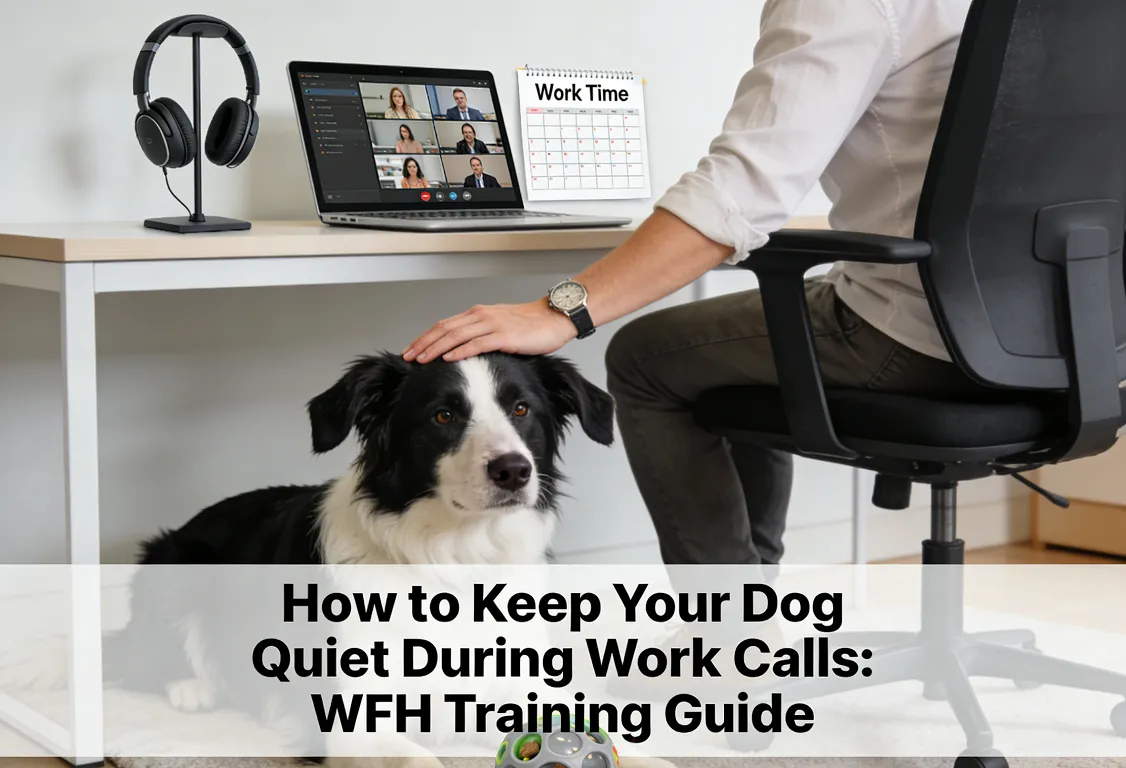
A peaceful WFH setup where both professional responsibilities and canine companionship coexist harmoniously
Understanding Why Dogs Interrupt Work Calls
Working from home with a dog can be both a blessing and a challenge, especially when important work calls are interrupted by barking, whining, or other attention-seeking behaviors. This comprehensive training guide provides proven strategies to teach your dog to remain calm and quiet during your professional meetings, ensuring you maintain a productive and professional work environment.
"Training your dog for quiet time during work calls isn't about suppressing their natural behaviors—it's about teaching them when silence is golden and providing appropriate alternatives for their energy and attention needs."
— Dr. Sarah Mitchell, Certified Animal Behaviorist
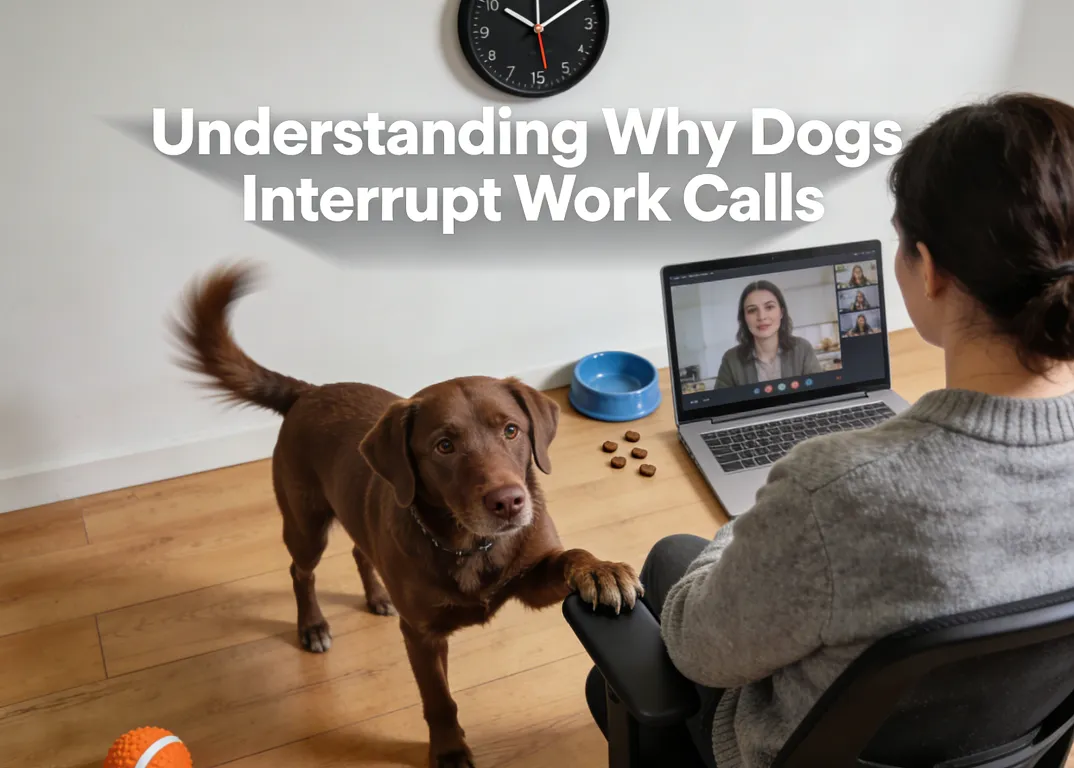
Understanding the root causes of interruptions is the first step toward effective training solutions
Common Reasons for Interruptions:
- Boredom: Lack of mental stimulation during long work hours
- Separation Anxiety: Confusion about your presence but lack of attention
- Learned Behavior: Previous success getting attention during calls
- Protective Instincts: Reacting to voices from computer/phone
- Basic Needs: Hunger, need to go outside, or discomfort
- Excess Energy: Insufficient physical exercise before work hours
Essential Pre-Call Preparation Strategies
Morning Routine Adjustments:
- Extended Morning Walk: 30-45 minutes of brisk exercise
- Mental Stimulation: 10 minutes of training or puzzle toys
- Scheduled Playtime: Interactive play 30 minutes before work starts
- Predictable Feeding: Consistent meal times to regulate energy
- Potty Break: Final bathroom opportunity before calls begin
Environmental Setup:
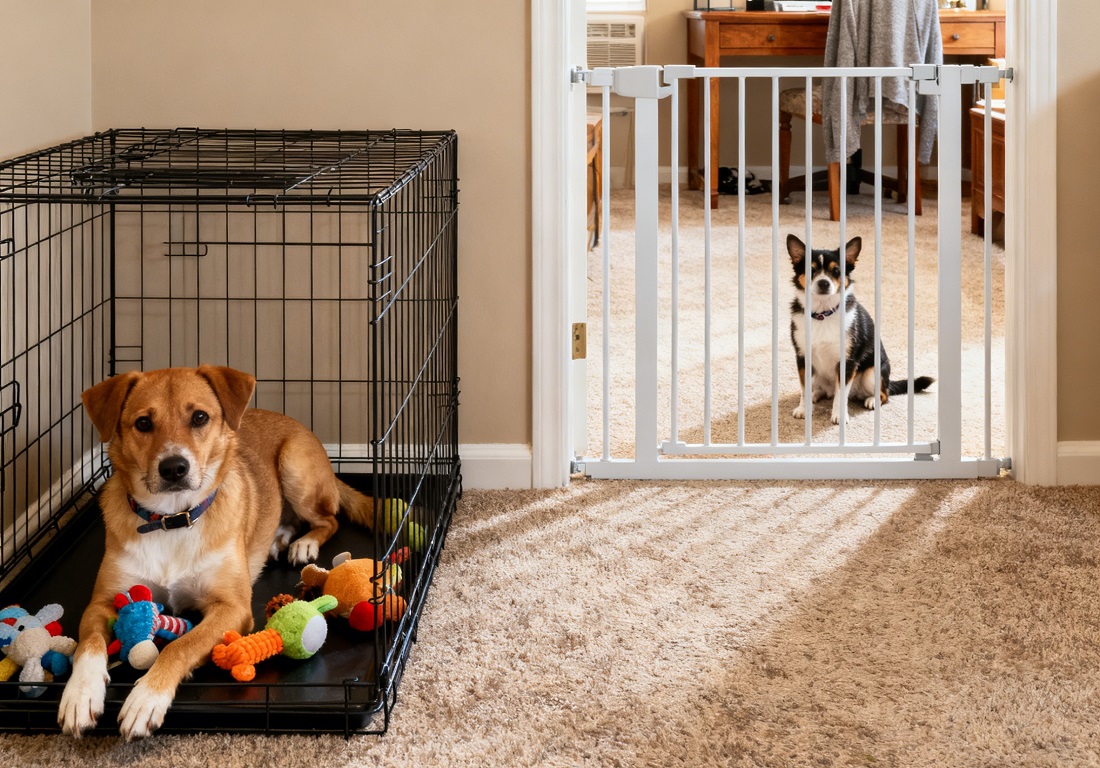
- Designated Quiet Zone: Comfortable bed/area away from workspace
- Sound Management: White noise machine or calming music
- Visual Barriers: Room divider or baby gate if needed
- Temperature Control: Ensure comfortable room temperature
- Safety Check: Remove potential hazards from quiet zone
Step-by-Step Training Program
Phase 1: Foundation Training (Days 1-7)
| Daily Session | Training Focus | Duration | Key Exercises |
|---|---|---|---|
| Morning | "Go to Place" Command | 10 minutes | Mat training, duration building, distance adding |
| Midday | Quiet Command Training | 5 minutes | Capture silence, quiet vs. speak discrimination |
| Afternoon | Simulated Call Practice | 15 minutes | Pretend calls, gradual duration, high-value rewards |
Training "Go to Your Place":
- Choose a specific mat/bed as the "quiet zone"
- Lure dog to bed with treat, mark and reward
- Add verbal cue "go to your place"
- Gradually increase duration on bed (5 sec → 5 min)
- Add distance (you move away from bed)
- Practice with mild distractions in room
- Use release word to end session
Phase 2: Call Simulation Training (Days 8-21)
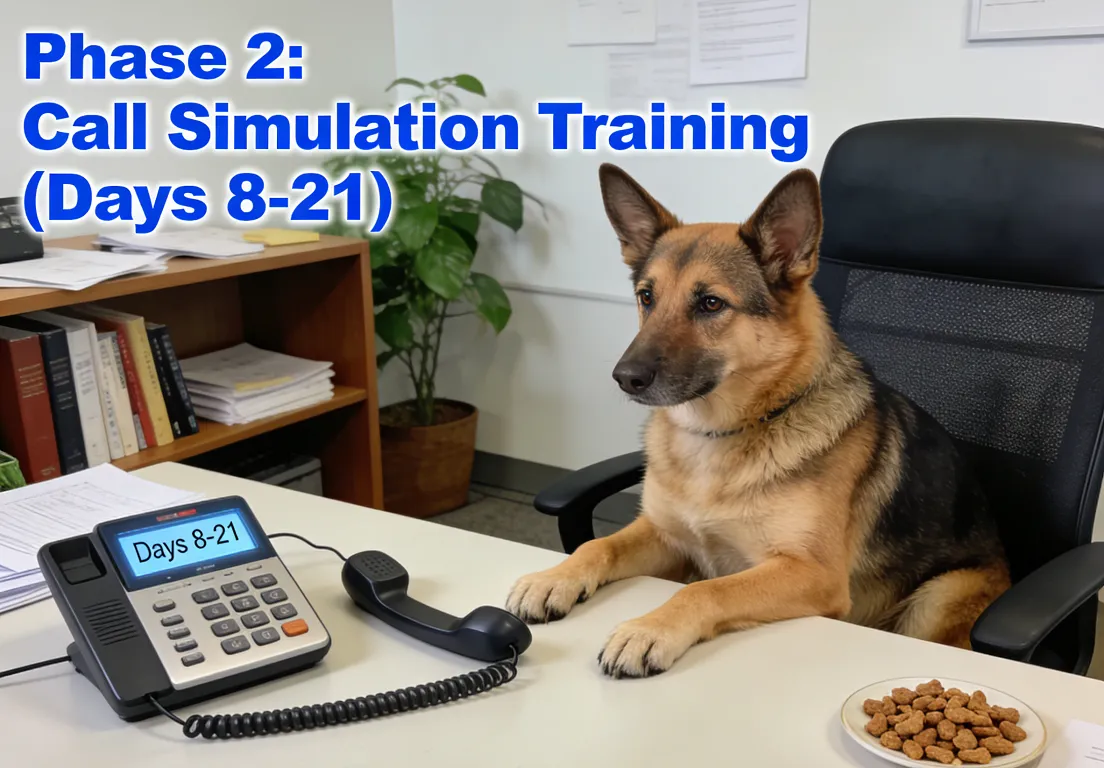
Gradual desensitization helps dogs learn that work calls are calm, predictable events, not times for attention-seeking
Gradual Desensitization Process:
Call Sound Desensitization:
- Day 8-10: Soft ringtone at low volume
- Day 11-13: Normal ringtone volume
- Day 14-16: Actual call with muted microphone
- Day 17-19: Short test calls with colleague
- Day 20-21: Full-length practice meetings
Your Behavior Patterns:
- Body Language: Practice "call posture" during training
- Voice Tone: Use work call voice during simulations
- Equipment Use: Wear headphones during practice
- Eye Contact: Avoid making eye contact with dog during "calls"
- Movement Patterns: Limit unnecessary movement during training
Phase 3: Real Call Implementation (Day 22+)
Pre-Call Checklist:
- ✅ 10-minute brisk walk or play session completed
- ✅ Food puzzle or chew provided in quiet zone
- ✅ Water available but limited 30 minutes before call
- ✅ "Go to your place" command successfully followed
- ✅ White noise/sound machine activated
- ✅ Treat pouch with high-value rewards within reach
- ✅ Mute button accessible for quick response to noises
High-Value Distraction Tools and Techniques
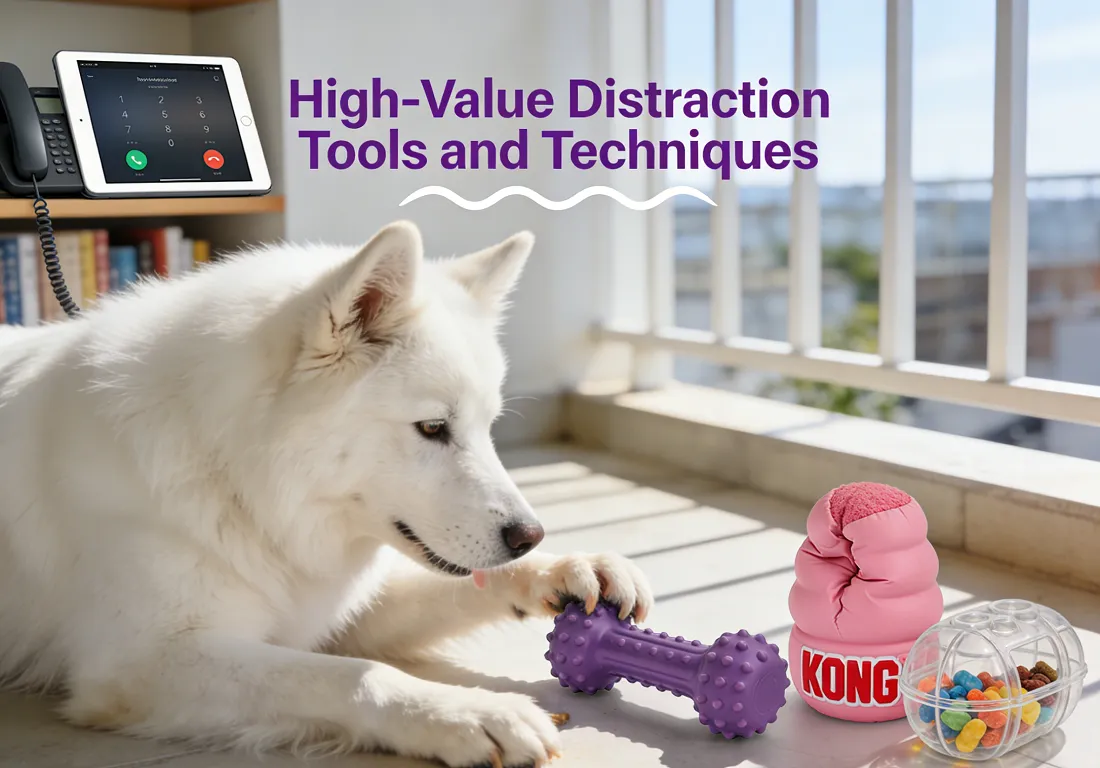
The right distraction tools can keep dogs happily occupied for the duration of important meetings and calls
| Tool Type | Duration | Best For | Preparation Tips |
|---|---|---|---|
| Frozen Kong/Toppl | 45-60 minutes | Long meetings, important calls | Freeze overnight, layer different textures |
| Lick Mats | 20-30 minutes | Moderate length calls | Use Greek yogurt, peanut butter, pumpkin |
| Puzzle Toys | 15-25 minutes | Shorter meetings, quick calls | Rotate different puzzles to maintain novelty |
| Long-Lasting Chews | 30-90 minutes | Dogs who settle with chewing | Monitor safety, choose appropriate hardness |
| Snuffle Mats | 10-20 minutes | Initial settling period | Hide high-value treats in different layers |
Breed-Specific Considerations
High-Energy Breeds (Working/Sporting):
- Additional Exercise Needs: 60+ minutes before work
- Mental Challenge Required: Advanced puzzle toys
- Job Assignment: Give "work" during your work (find treats, etc.)
- Best Tools: Frozen stuffed toys, complex puzzles
- Common Challenge: Restlessness despite physical exercise
Companion/Toy Breeds:
- Proximity Preference: May need to be closer to you
- Separation Sensitivity: Gradual distance training needed
- Best Tools: Cozy beds near workspace, interactive toys
- Common Challenge: Whining for attention vs. barking
- Solution: Teach "quiet" command specifically for whining
Emergency Strategies for Unexpected Interruptions
When Your Dog Barks During an Actual Call:
- Immediate Mute: Hit mute button instantly
- No Eye Contact: Avoid looking at or acknowledging dog
- Calm Redirection: Toss high-value treat to quiet zone (if possible)
- Brief Pause: "Could you repeat that? I had a quick audio issue"
- Post-Call Analysis: Identify trigger and adjust training
- Never Punish: Scolding creates negative call associations
Advanced Training: Teaching the "Quiet" Command
| Training Method | Steps | Best For | Timeline |
|---|---|---|---|
| Capture Method | 1. Wait for natural quiet moment 2. Mark with clicker/yes 3. Reward immediately 4. Add "quiet" cue |
Dogs with natural calm periods | 2-3 weeks |
| Interrupt and Redirect | 1. Prompt mild bark (doorbell sound) 2. Present high-value treat at nose 3. Mark/reward moment of silence 4. Gradually increase quiet duration |
Dogs who bark at specific triggers | 3-4 weeks |
| Quiet vs. Speak | 1. Teach "speak" command first 2. Then teach "quiet" as opposite 3. Practice alternating commands 4. Fade "speak" cue over time |
Smart dogs who learn by contrast | 4-5 weeks |
Creating a Sustainable WFH Routine
Sample Daily Schedule:
- 7:00 AM: Morning walk/exercise (45 minutes)
- 8:00 AM: Breakfast + mental stimulation (puzzle)
- 9:00 AM: Work begins, dog in quiet zone with chew
- 11:00 AM: Mid-morning potty/play break (15 min)
- 1:00 PM: Lunch break walk (20 minutes)
- 3:00 PM: Afternoon enrichment (frozen Kong)
- 5:00 PM: Work ends, dedicated play/training time
Weekly Maintenance:
- Monday: Review "quiet" and "place" commands
- Wednesday: Introduce new puzzle or enrichment
- Friday: Practice with most challenging call type
- Weekend: Longer adventures, socialization outings
- Monthly: Assess progress, adjust strategies as needed
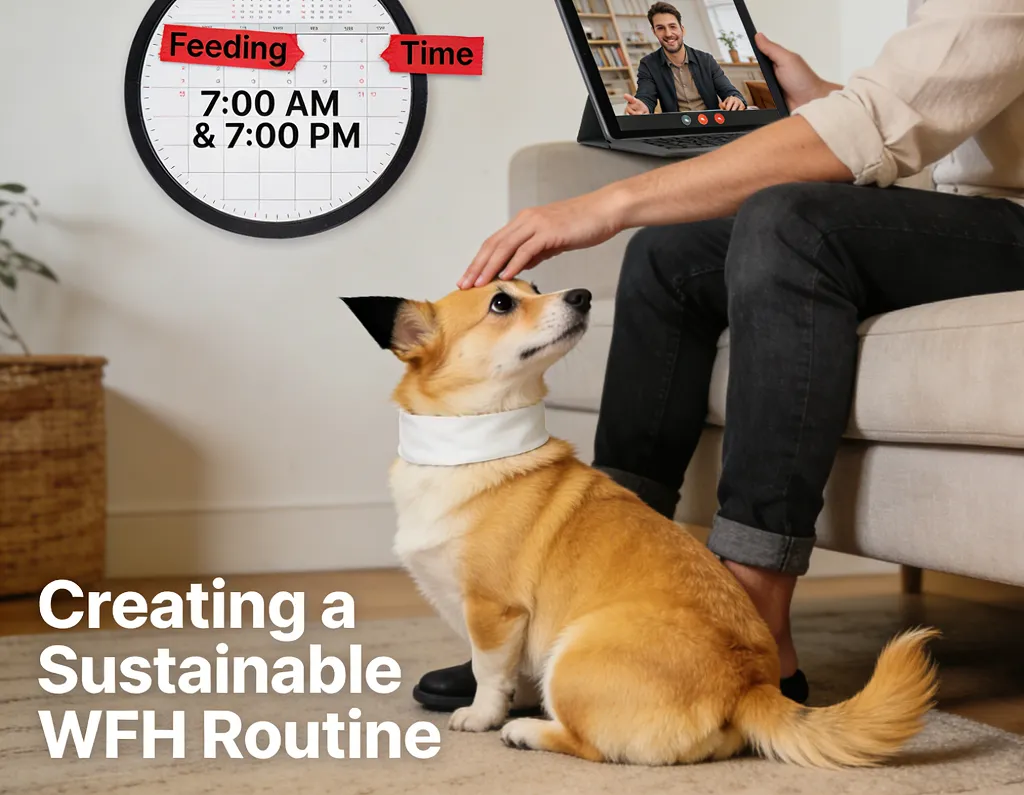
A balanced daily routine meets both your work needs and your dog's physical and mental requirements
Technology and Equipment Solutions
WFH Dog Parent Toolkit:
- Noise-Canceling Headphones: For you, reduces need to mute frequently
- Pet Cameras: Monitor dog without leaving desk
- Automatic Treat Dispensers: Remote-controlled rewards
- Calming Music/Apps: Specifically designed for dog relaxation
- White Noise Machines: Mask outside noises that trigger barking
- Baby Monitors: Low-tech solution for monitoring
- Smart Home Devices: Control environment (lights, sounds) remotely
Troubleshooting Common Problems
| Problem | Likely Cause | Immediate Solution | Long-Term Fix |
|---|---|---|---|
| Barking at delivery sounds | Protective instinct, doorbell trigger | Mute, close window, white noise | Desensitize to doorbell sounds, teach "enough" command |
| Whining at beginning of calls | Separation anxiety, routine change | Pre-call high-value distraction | Gradual desensitization to call-start cues |
| Getting up during long calls | Boredom, physical discomfort | Toss treat back to bed, quick redirect | Longer-lasting distractions, comfort upgrades |
| Reacting to voices on calls | Confusion about strangers in home | Headphones for you, quiet for dog | Play recorded meetings at low volume during calm times |
When to Seek Professional Help
"If your dog shows signs of severe anxiety, distress, or if training isn't progressing after 4-6 weeks of consistent effort, consult a professional. Some behaviors may indicate underlying issues that need specialized approaches."
— Professional Dog Trainers Association
Signs You Need Professional Assistance:
- Destructive behaviors during calls despite training
- Excessive panting, drooling, or stress signals
- Aggression or resource guarding around quiet zone
- Inability to settle even with extensive exercise
- Your own frustration affecting training consistency
- Multiple failed attempts with different methods
Success Metrics and Progress Tracking
Monthly Progress Checklist:
- ✅ Dog settles within 5 minutes of call start
- ✅ No interruptions during 30-minute meetings
- ✅ "Go to place" command followed 90% of time
- ✅ Quiet during routine delivery/passerby sounds
- ✅ Self-entertains with provided distractions
- ✅ Shows relaxed body language during calls
- ✅ You feel confident scheduling back-to-back calls
- ✅ Colleagues haven't mentioned dog noises recently
- ✅ Stress levels reduced for both you and dog
- ✅ Enjoy WFH more with peaceful coexistence
Conclusion: Achieving Harmony in Your WFH Setup
Training your dog to stay quiet during work calls is an investment that pays dividends in professional credibility, reduced stress, and improved work-life balance. Remember that consistency, patience, and understanding your dog's individual needs are key to success.
Every dog can learn to respect work boundaries with the right approach. Some may need more physical exercise, others more mental stimulation, but all benefit from clear communication and positive reinforcement. As you implement these strategies, you'll find that peaceful work calls become the norm, allowing you to excel professionally while still enjoying the wonderful benefits of having a canine companion during your workday.
"The ultimate WFH success isn't just a quiet dog during calls—it's a happy, fulfilled dog who understands the rhythm of your workday and has learned how to be your calm, supportive coworker."
About the Author
Robert Chen is a Certified Professional Dog Trainer with over 15 years of experience specializing in positive reinforcement methods. He holds certifications from the Certification Council for Professional Dog Trainers and has helped thousands of dog owners build better relationships with their pets through effective, humane training techniques.