How to Introduce a New Dog to Your Existing Pets: A Step-by-Step Guide
How to Introduce a New Dog to Your Current Pets: A Stress-Free Step-by-Step Guide
The Complete Guide to Successful Pet Introductions
Bringing a new dog into a home with existing pets requires careful planning and patience. This comprehensive guide provides proven step-by-step methods, preparation strategies, and troubleshooting tips to ensure a smooth transition and create a harmonious multi-pet household that benefits all animals involved.
"Successful introductions set the foundation for lifelong relationships. Rushing the process is the most common mistake—taking it slow saves months of conflict resolution."
— Dr. Emily Chen, Veterinary Behaviorist
Pre-Introduction Preparation: The Critical First Steps
| Timeline | Preparation Tasks | Why It Matters | Common Mistakes |
|---|---|---|---|
| 2-4 Weeks Before | Vet check for all pets, update vaccinations, gather supplies | Prevents disease transmission, identifies health issues | Skipping health checks, assuming all pets are healthy |
| 1-2 Weeks Before | Set up separate spaces, establish new routines, scent swapping | Reduces territorial stress, allows gradual adjustment | No dedicated space for new dog, abrupt routine changes |
| 3-7 Days Before | Practice obedience with current pets, arrange baby gates | Strengthens owner control, prepares safety barriers | Poor obedience control during critical moments |
| The Day Before | Final scent exchange, prepare high-value treats, plan neutral territory | Maximizes scent familiarity, enables positive reinforcement | Introducing in home territory first (causes territorial aggression) |
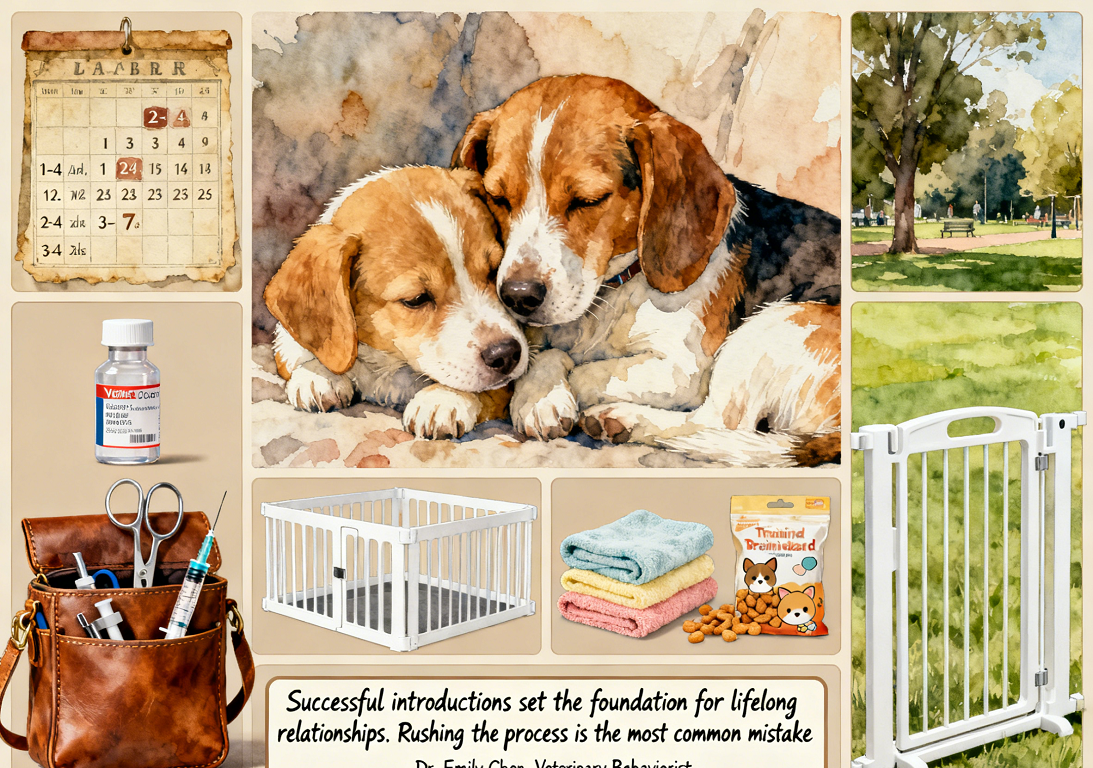
Proper preparation supplies make introductions smoother and safer
Essential Supplies for Successful Introductions
Safety & Management:
- Baby gates (2+): For visual separation with scent exchange
- Secure leashes & harnesses: No retractable leashes
- Muzzles (properly fitted): For safety with unknown dogs
- Separate crates: Safe spaces for each animal
- Treat pouches: For quick reinforcement access
Comfort & Distraction:
- High-value treats: Chicken, cheese, liver treats
- Interactive toys: Kongs, puzzle feeders
- Calming aids: Adaptil diffusers, calming treats
- White noise machine: Masks startling sounds
- Camera/monitor: To observe unsupervised areas
The 4-Phase Introduction Protocol
| Phase | Duration | Activities | Success Signs | When to Move Forward |
|---|---|---|---|---|
| Phase 1: Scent Familiarization | 2-7 days | Swap bedding, toys; feed on opposite sides of closed door | Curious sniffing, no stress signals at scents | Both pets are relaxed around each other's scent |
| Phase 2: Visual Contact | 3-10 days | Baby gate separation, parallel feeding, short supervised views | Calm observation, occasional play bows through gate | Pets can eat near gate without staring/fixating |
| Phase 3: Controlled Meetings | 1-3 weeks | Neutral territory walks, parallel walking, brief leashed meetings | Loose body language, play invitations, mutual sniffing | Multiple positive leashed interactions |
| Phase 4: Supervised Cohabitation | 2-4 weeks+ | Increasing unsupervised time, shared activities, routine establishment | Comfortable coexistence, appropriate play, resource sharing | No tension during meals, toys, or resting periods |
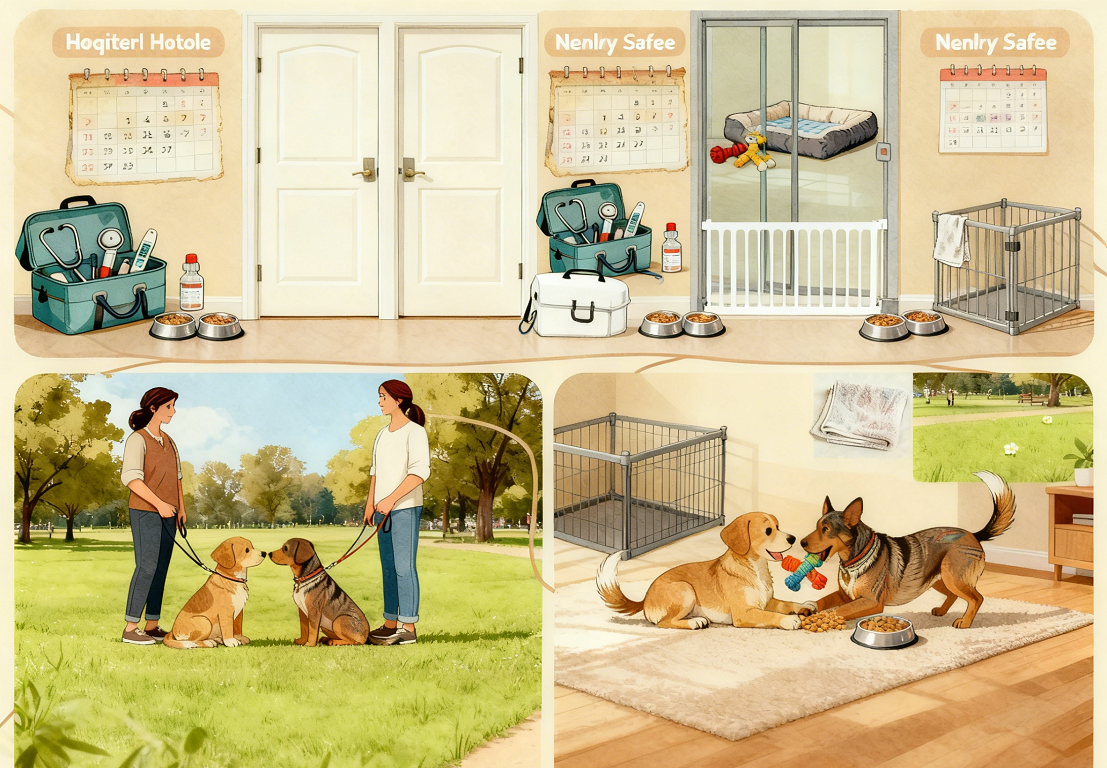
Understanding each phase ensures proper pacing and success
Dog-to-Dog Introductions: Special Considerations
High-Energy Dog + Calm Dog:
- Exercise new dog thoroughly before meetings
- Teach "settle" command to energetic dog
- Provide calm dog escape routes and safe spaces
- Use leashes to manage intensity initially
- Consider age/energy mismatch carefully
Same-Sex Pairings (Higher Risk):
- Extend introduction timeline by 50%
- Neuter/spay all dogs before introduction
- Watch for same-sex aggression signs closely
- Consult professional for breed-specific risks
- Have backup separation plan ready
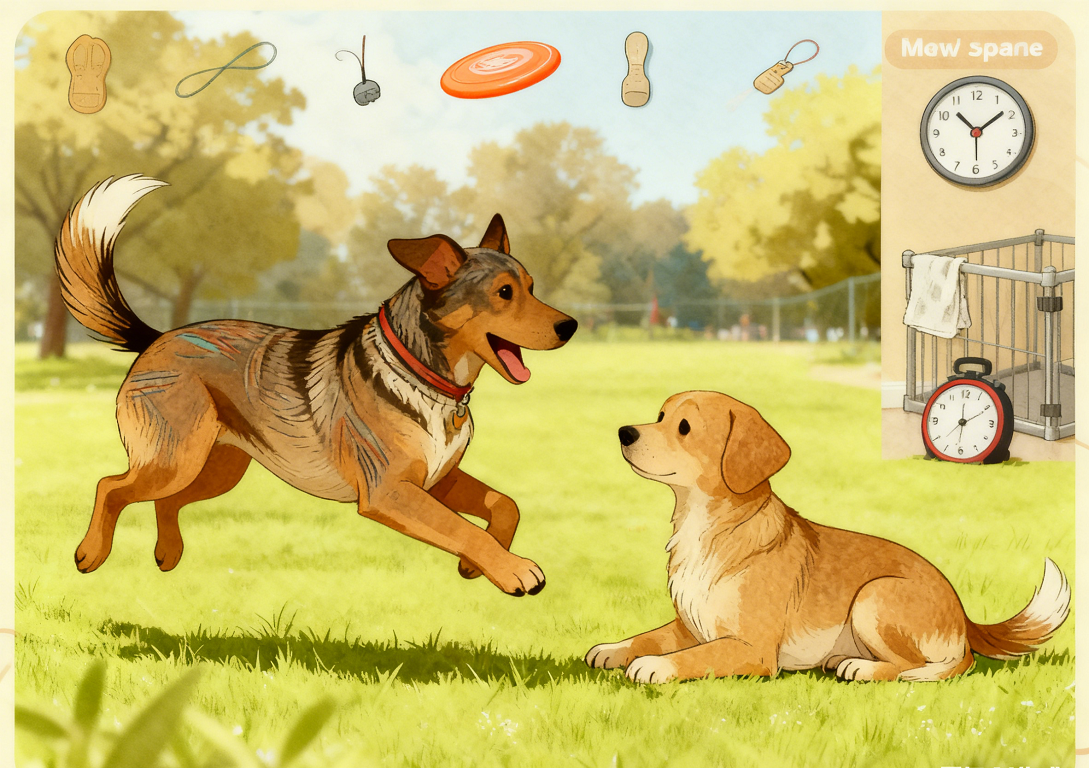
Different dog combinations require specific introduction strategies
Dog-to-Cat Introductions: Creating Feline Safety
| Stage | Cat's Needs | Dog's Training | Environment Setup | Progress Indicators |
|---|---|---|---|---|
| Initial Separation | Safe room with all resources | "Leave it" command, impulse control | Baby gates with cat doors, high escape routes | Cat eats/plays normally in safe room |
| Scent Exchange | Feliway diffuser, familiar bedding | Reward calm behavior around cat scent | Swap rooms daily, feed near scent items | Both animals show curiosity, not fear/aggression |
| Visual Contact | High perches, clear escape routes | Leashed "watch me" near cat, reward calm | Glass door or secure gate separation | Cat observes without hiding, dog remains under threshold |
| Controlled Meetings | Multiple exits, preferred hiding spots | Solid "leave it" even when cat moves | Dog leashed, cat free to leave | Cat approaches voluntarily, dog maintains self-control |
| Supervised Freedom | Access to dog-free zones always | Reliable recall from cat chasing | Baby gates remain for cat-only areas | Peaceful coexistence, mutual ignoring |

Safe environments and proper pacing prevent stress for both species
Introducing to Small Animals (Rabbits, Birds, etc.)
Prey Drive Assessment:
- High prey drive signs: Freezing, staring, lunging at movement
- Moderate drive: Interest but responsive to commands
- Low drive: Minimal interest, easy distraction
- Never leave unattended regardless of assessment
- Breed considerations: Sighthounds, terriers typically higher drive
Safety Protocols:
- Always use secure, escape-proof enclosures
- Muzzle train dog for initial introductions
- Keep small animals in separate, locked room when unsupervised
- Use positive association training (treats when near enclosure)
- Accept that some dogs can never be trusted with small pets
Reading Canine Body Language During Introductions
| Body Signal | Positive/Neutral Signs | Warning Signs | Emergency Signs (Separate Immediately) | Appropriate Response |
|---|---|---|---|---|
| Tail Position | Soft wag at mid-level, loose movement | High stiff wag, tucked tightly | Hair raised on tail, rapid stiff wagging | Monitor closely, redirect if stiffening |
| Eyes/Face | Soft eyes, blinking, looking away | Hard stare, whale eye (white showing) | Direct fixed stare with still body | Break eye contact, create distance |
| Body Posture | Relaxed muscles, curved body | Stiffening, leaning forward | Freezing in place, raised hackles | Increase distance immediately |
| Mouth | Open relaxed mouth, panting | Closed tense mouth, lip licking | Lips pulled back, snarling, snapping | Separate immediately, end session |

Recognizing subtle body language prevents conflicts before they escalate
Managing Resources to Prevent Conflict
High-Value Resource Management:
- Food: Feed in separate rooms for first month minimum
- Toys: Put away when not supervised, have duplicates
- Beds/Resting Areas: Multiple options in different locations
- Human Attention: Schedule individual time with each pet
- Entry/Exit Points: Manage greetings to prevent crowding
Preventing Resource Guarding:
- Trade-up method for valued items
- Hand-feed meals initially to build positive association
- Teach "drop it" and "leave it" commands reliably
- Supervise all interactions with high-value items
- Consult professional if guarding behaviors appear
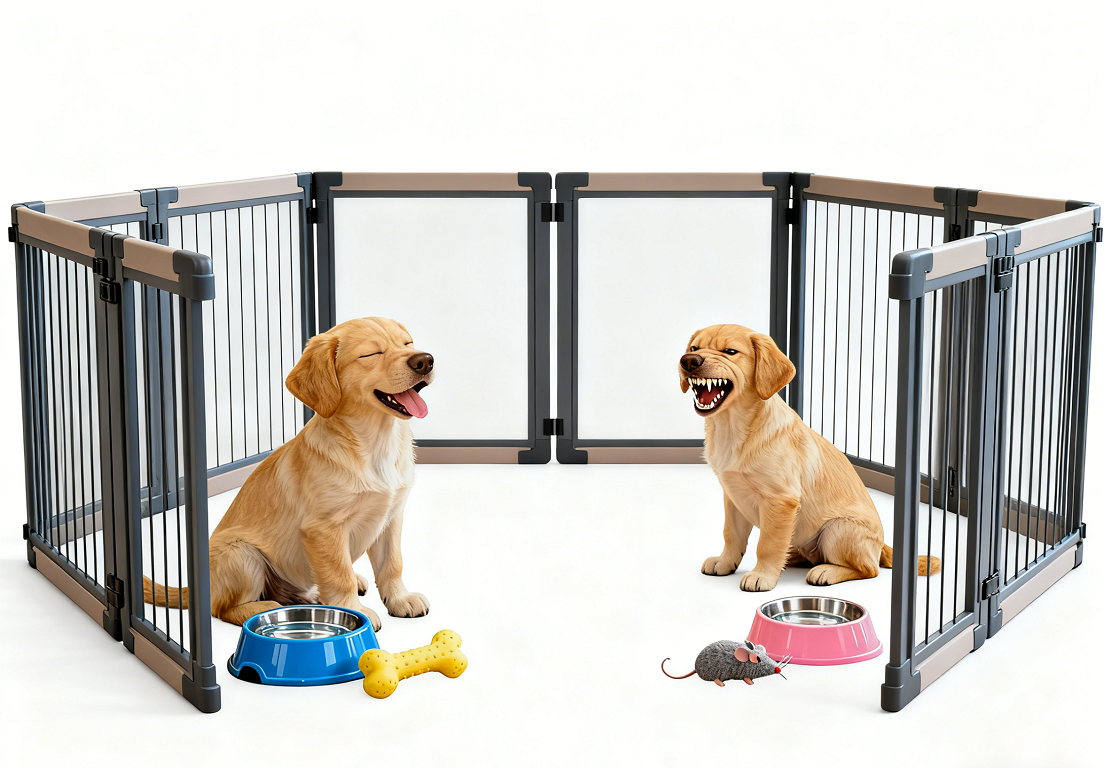
Proper resource setup prevents competition and builds harmony
Troubleshooting Common Introduction Problems
| Problem | Likely Causes | Immediate Action | Long-term Solution | When to Get Professional Help |
|---|---|---|---|---|
| Growling/Snarling | Fear, resource protection, territoriality | Separate immediately, no punishment | Re-start at earlier phase, increase distance | If occurs after 3+ proper introductions |
| Excessive Fear/Hiding | Trauma history, personality mismatch, rushed intro | Give fearful pet more space/time | Counter-conditioning, very gradual exposure | If no improvement after 2 weeks of slow exposure |
| Overly Rough Play | Play style mismatch, overarousal, poor social skills | Interrupt with time-outs, teach gentler play | Supervised play sessions with frequent breaks | If play consistently escalates to aggression |
| House Soiling | Stress marking, anxiety, territory claiming | Clean thoroughly with enzymatic cleaner | Increase supervision, more frequent potty breaks | If continues despite management and vet check |
| Refusal to Eat | Stress, competition anxiety, illness | Feed separately in quiet locations | Establish feeding routine, use food puzzles | If lasts more than 48 hours (requires vet visit) |
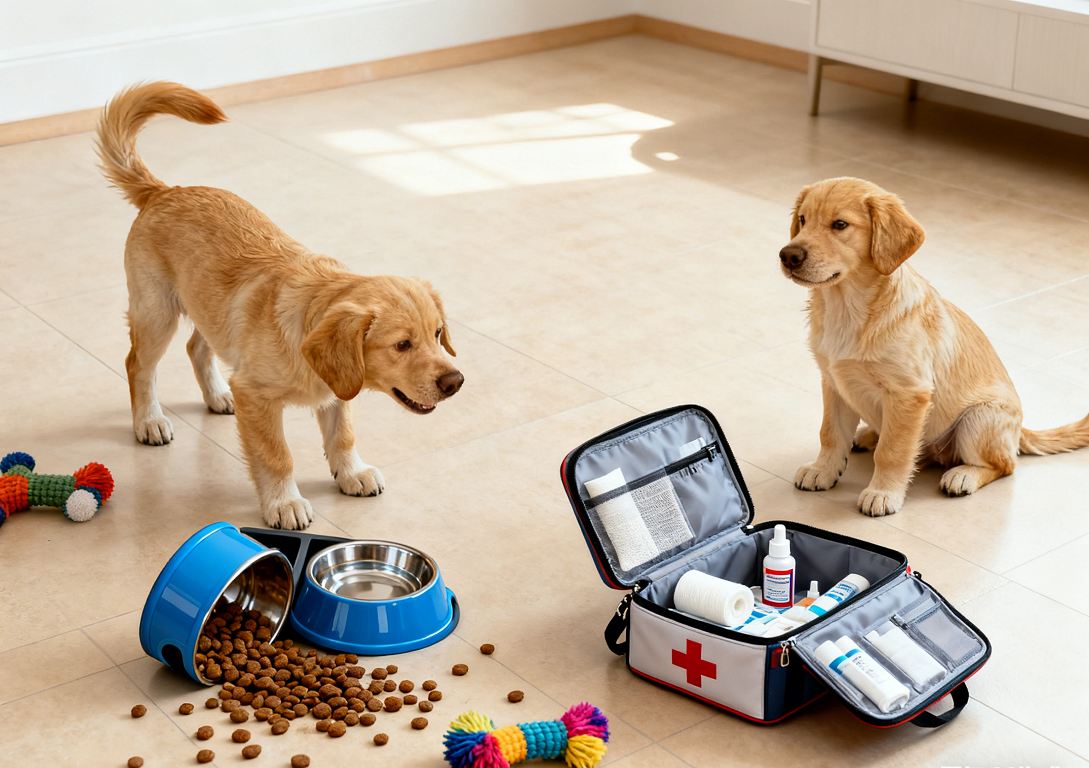
Understanding common issues helps prevent and resolve conflicts
The First 30 Days: Timeline for Success
Week 1: Separation & Scent
- Complete physical separation with scent exchange
- Establish individual routines
- Begin basic obedience reinforcement
- Monitor stress levels in all pets
- No face-to-face meetings yet
Weeks 2-3: Controlled Exposure
- Begin visual contact through barriers
- Parallel activities (feeding, walking separated)
- Brief supervised meetings in neutral area
- Increase positive associations
- Watch closely for stress signals
Week 4: Integration Begins
- Gradual increase in supervised together time
- Begin sharing common spaces with supervision
- Establish house rules for all pets
- Continue separate feeding/sleeping areas
- Evaluate progress, adjust pace as needed
When Introduction Fails: Recognizing Incompatibility
Signs of Fundamental Incompatibility:
- Continuous stress despite slow, proper introduction
- Aggression that escalates despite management
- One pet stops eating/drinking for extended period
- Injury to any animal during controlled introduction
- Professional behaviorist recommends separation
Options if Incompatible:
- Permanent management (rotating access, crating)
- Rehoming the new dog (if recent adoption)
- Consult veterinary behaviorist for medication options
- Create completely separate living areas
- Consider if household can manage long-term separation
Conclusion: Patience Creates Lasting Harmony
Successful pet introductions require more patience than most owners anticipate, but the investment pays off in years of peaceful coexistence. By proceeding slowly, reading animal body language accurately, and creating positive associations, you can build strong relationships between your pets that enhance all their lives.
Remember that each animal is an individual, and there's no universal timeline that works for all. Some pairs become fast friends in days, while others need months to reach comfortable coexistence. The key is to let the animals set the pace while you provide the structure and safety they need to build trust with each other.
"In multi-pet households, successful introductions aren't a race—they're a carefully choreographed dance where patience, observation, and positive reinforcement lead to lifelong harmony."
About the Author
Marcus Johnson, CPDT-KA, CBCC-KA is a certified professional dog trainer and certified behavior consultant with 15 years of experience specializing in multi-pet household dynamics. He has successfully facilitated over 1,000 pet introductions and developed protocols used by animal shelters nationwide.