Dog Stress Signals: A Guide to Reading the Signs and Calming Your Pet
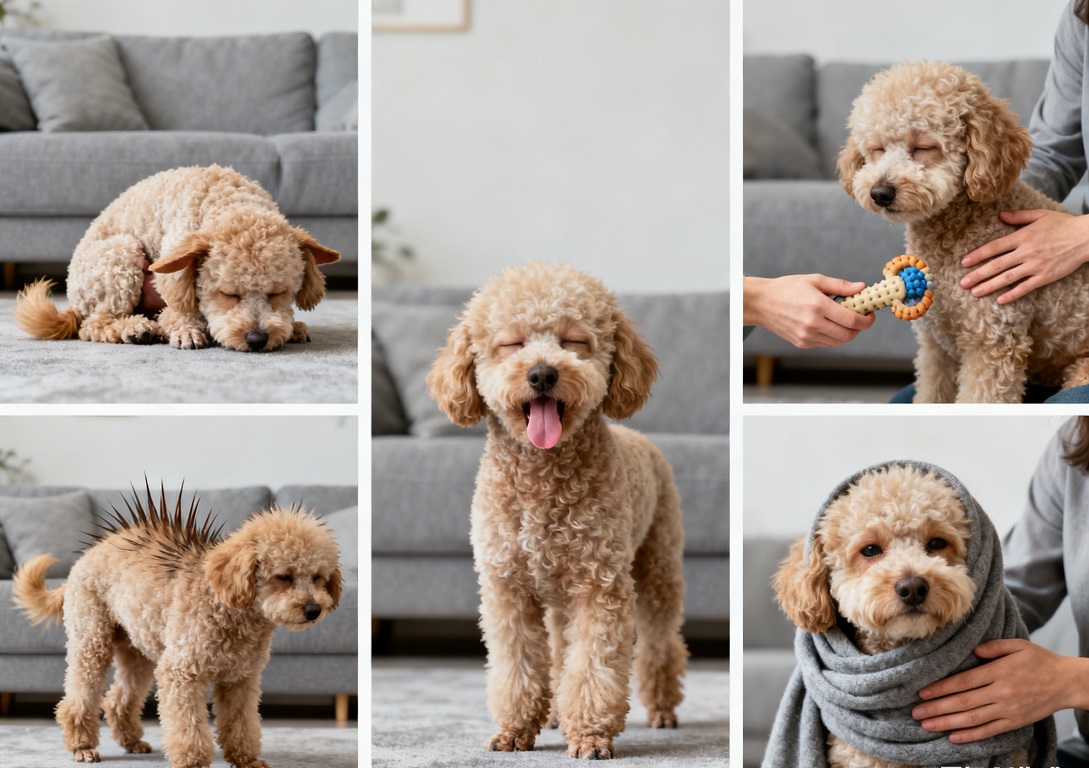
Learning to recognize stress signals allows you to help your dog before anxiety escalates
Understanding Canine Stress: A Complete Guide to Recognizing and Reducing Dog Anxiety
Dog stress signals are often subtle and easily missed by even experienced owners but recognizing them is crucial for your pet's wellbeing. This comprehensive guide will teach you to read canine body language, identify anxiety triggers, and implement effective calming strategies to help your dog feel safe, secure, and relaxed in any situation.
"Dogs communicate stress through their bodies long before they resort to problem behaviors. Learning to read these signals allows us to intervene early and prevent escalation."
— Dr. Sarah Johnson, Certified Veterinary Behaviorist
Recognizing Common Dog Stress Signals: From Subtle to Obvious
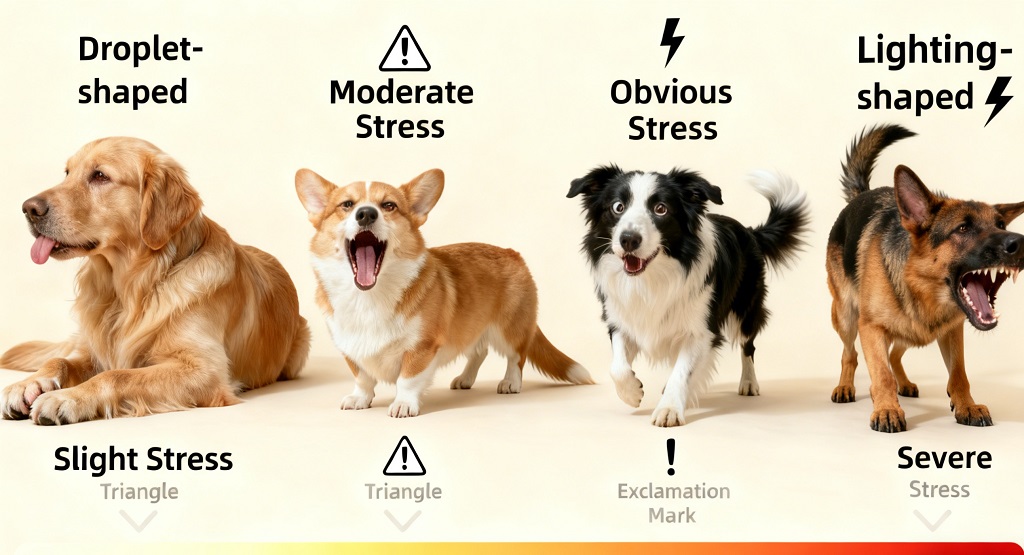
Dogs communicate stress through body language long before vocalizing distress
| Stress Level | Physical Signals | Behavioral Changes | Vocalizations | Common Triggers |
|---|---|---|---|---|
| Low Stress (Early Warning) |
Yawning, lip licking, averting gaze, half-moon eye | Shaking off (like wet), scratching suddenly, sniffing ground | Silent, occasional sigh | Mild discomfort, uncertainty, novel situations |
| Moderate Stress (Increasing Anxiety) |
Panting (no heat/exercise), pacing, trembling, tucked tail | Hiding, seeking comfort, decreased appetite, restlessness | Whining softly, groaning | Loud noises, separation, vet visits, crowds |
| High Stress (Distress) |
Dilated pupils, whale eye (white showing), raised hackles, freezing | Destructive behavior, house soiling, escape attempts | Excessive barking, howling | Phobias, trauma triggers, intense fear |
| Extreme Stress (Fight/Flight) |
Stiff body, lowered head, weight shifted back, crouching | Aggression, panic running, shutdown (complete stillness) | Growling, snarling, screaming | Perceived threats, trapped situations, pain |
| Chronic Stress (Long-term) |
Weight loss/gain, dull coat, digestive issues, excessive shedding | Compulsive behaviors, lethargy, hyper-vigilance | Minimal vocalization (may indicate shutdown) | Constant environmental stress, lack of security |
Calming Signals: How Dogs Communicate Discomfort
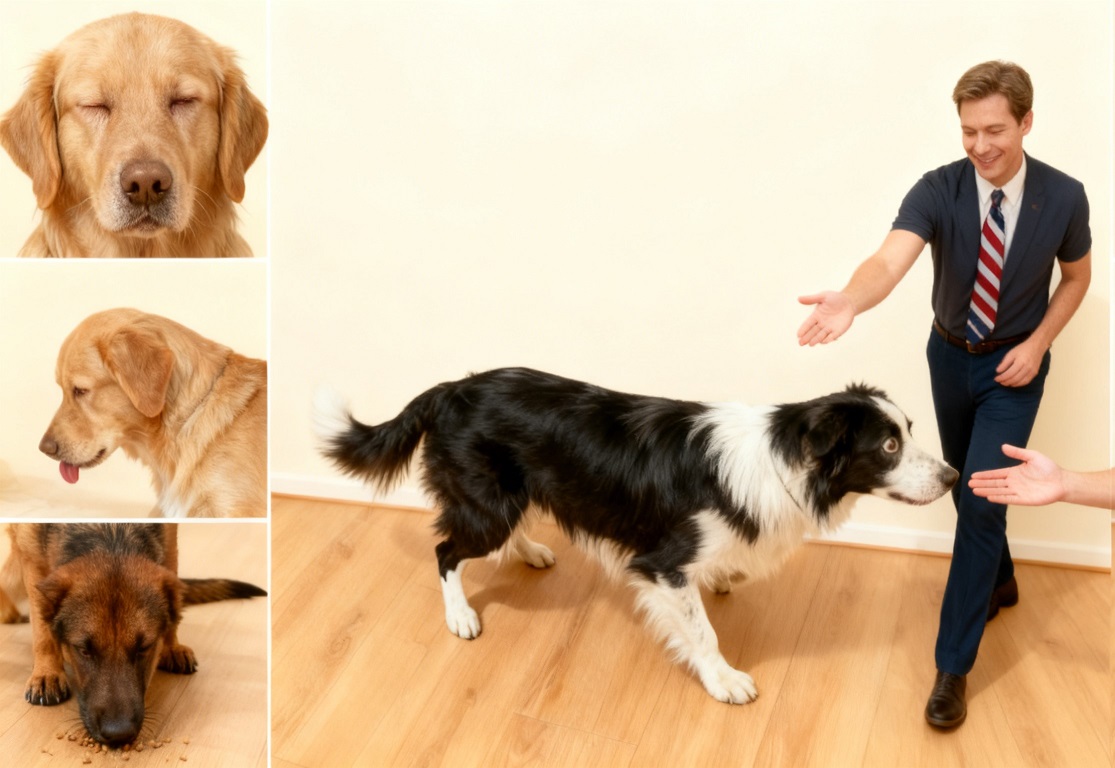
Calming signals are a dog's way of saying "I'm uncomfortable" - learning them prevents escalation
Common Calming Signals Dogs Use:
Facial & Head Signals:
- Lip licking: Quick tongue flicks when not eating
- Yawning: When not tired, often in stressful situations
- Turning head away: Avoiding direct eye contact
- Sniffing ground: Sudden interest in ground when approached
- Blinking/squinting: Slow, deliberate eye movements
Body Language Signals:
- Shaking off: Full-body shake when not wet
- Slow movements: Exaggerated slowness in actions
- Curving approach: Walking in arc rather than straight line
- Sitting/laying down: When others are standing/excited
- Freezing: Sudden complete stillness
How to Respond to Calming Signals:
- Respect the signal: Give dog space when they show discomfort
- Reduce pressure: Stop approaching, turn sideways
- Speak softly: Use calm, low-pitched voice
- Offer choice: Allow dog to move away if needed
- Change the situation: Remove stressor if possible
- Avoid punishment: Never punish stress signals
- Watch your own body: Don't lean over, stare directly
- Use positive association: Pair stressor with treats
- Provide escape route: Ensure dog can leave situation
- Monitor escalation: Watch for increasing stress signs
Immediate Calming Techniques for Stressed Dogs
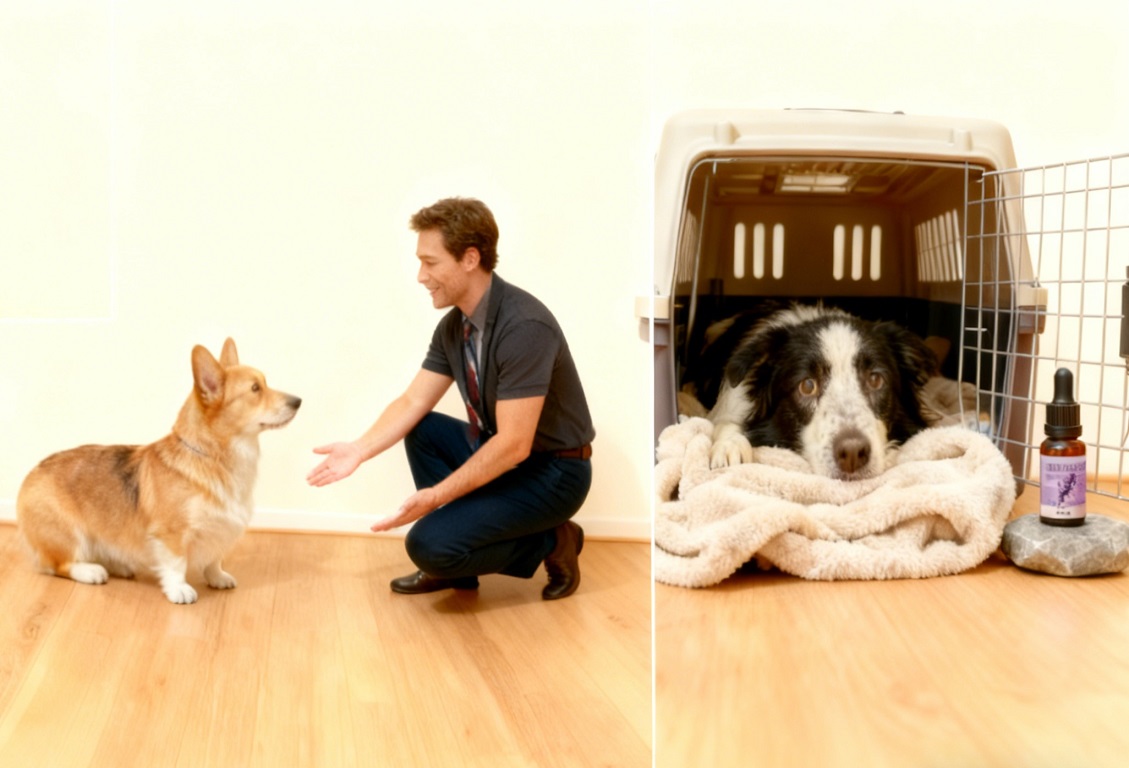
Quick interventions can prevent stress from escalating into panic
| Technique | How to Implement | Best For Situations | Effectiveness Level | Important Considerations |
|---|---|---|---|---|
| Pressure Wrap | ThunderShirt or snug t-shirt applying gentle, constant pressure | Thunderstorms, fireworks, separation anxiety | High for many dogs (70% success rate) | Proper fit crucial, test before stressful event |
| Decompression Time | Quiet time alone in safe space with no demands | After stressful events, when overwhelmed | Very High - allows nervous system reset | Ensure space is truly safe/comfortable for dog |
| Calming Scents | Adaptil (pheromones), lavender, chamomile diffusers/sprays | Environmental anxiety, travel, new places | Moderate - works well with other methods | Quality matters, some dogs sensitive to smells |
| Food Puzzles | Interactive feeders, Kongs, snuffle mats to engage mind | Boredom stress, alone time, mild anxiety | High for mild-moderate stress | Not for panic situations, may frustrate some dogs |
| Massage/TTouch | Gentle circular massage, ear strokes, TTouch techniques | General anxiety, fear of handling, hyper-vigilance | Varies by dog - some respond extremely well | Watch for stress signals, stop if increases anxiety |
Long-Term Stress Reduction Strategies
Environmental Modifications:
Safe Spaces Creation:
- Designated quiet zone: Crate or room with bedding, water
- Sound insulation: White noise machine, soundproofing
- Visual barriers: Window covers for outdoor triggers
- Consistent routine: Predictable schedule reduces anxiety
- Escape access: Multiple exits in social situations
Enrichment Activities:
- Scent work: Hiding treats, scent trails indoors
- Training games: Positive reinforcement sessions
- Appropriate chew items: Reduces stress through chewing
- Social opportunities: With known, calm dog friends
- Exploration walks: Sniff-focused walks in safe areas
Common Stress Triggers and How to Desensitize
| Common Trigger | Initial Signs of Stress | Desensitization Steps | Management During Process | Expected Timeframe |
|---|---|---|---|---|
| Loud Noises (Thunder, fireworks) |
Pacing, panting, hiding, trembling | 1. Recorded sounds at low volume + treats 2. Gradually increase volume 3. Pair with favorite activities |
Pressure wrap, safe space, don't reinforce fear | 4-8 weeks with consistency |
| Separation (Being alone) |
Whining, destruction, pacing as you prepare | 1. Very short departures (seconds) 2. Gradually increase time 3. Vary departure cues |
Interactive toys, calm departures/returns | Several months for severe cases |
| Vet Visits | Resisting car, trembling at clinic, hiding | 1. Happy visits (just treats, no exam) 2. Handle exercises at home 3. Clinic parking lot treats |
Calming supplements before, fear-free certified vet | 2-6 months for significant improvement |
| Strangers/Guests | Barking, retreating, whale eye, stiff body | 1. Guest ignores dog initially 2. Guest tosses treats away 3. Let dog approach when ready |
Baby gate separation, escape route, no forced interaction | Variable - depends on dog's history |
| Other Dogs | Leash pulling, barking, crouching, lunging | 1. See dog at distance + treats 2. Gradually decrease distance 3. Parallel walking with calm dog |
Increase distance when stressed, avoid on-leash greetings | 6-12 months for reactive dogs |
Stress Signals by Body Part: A Detailed Guide
Eyes & Ears:
- Whale eye: White of eye showing (stress/fear)
- Hard stare: Fixed, unblinking gaze (tension)
- Averted gaze: Looking away (discomfort)
- Ears back: Pinned flat against head (fear)
- Ears sideways: Neither forward nor back (uncertainty)
Mouth & Tail:
- Lip licking: Without food present (anxiety)
- Panting: When not hot/exercised (stress)
- Yawning: When not tired (calming signal)
- Tucked tail: Between legs (fear/submission)
- Stiff tail: High and rigid (arousal/tension)
Body Position:
- Crouching/low: Making self small (fear)
- Stiff/frozen: Tense muscles, immobile (high stress)
- Weight shift: Leaning away from stressor (avoidance)
- Raised hackles: Hair standing up (arousal/fear)
- Shaking: Whole body tremors (fear/excitement)
Behavioral Changes:
- Displacement behaviors: Scratching, sniffing suddenly
- Hyper-vigilance: Constantly scanning environment
- Hiding/escaping: Seeking physical barriers
- Reduced appetite: Refusing treats in stressful situations
- Increased sleep: Or inability to settle
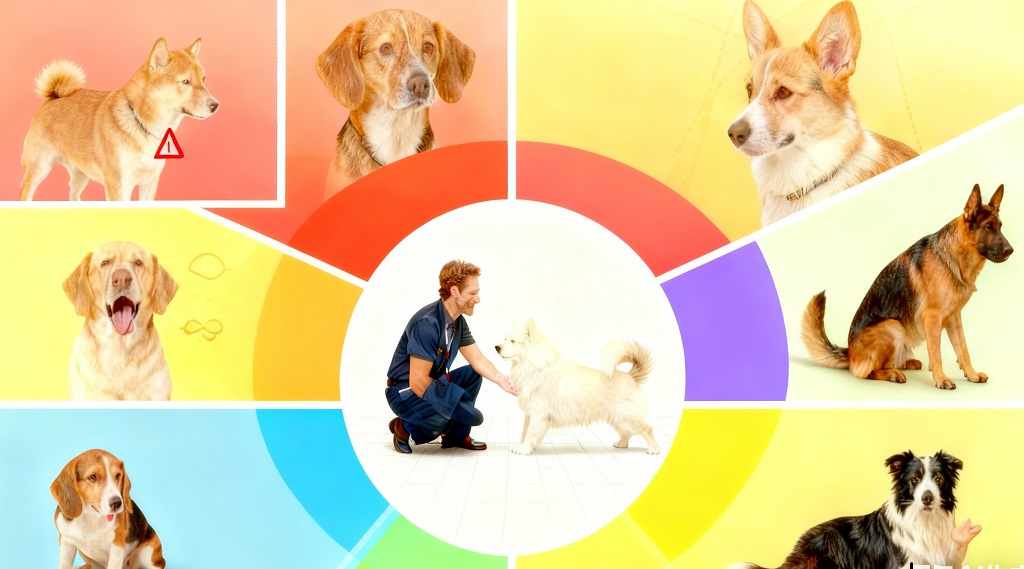
Every part of a dog's body communicates their emotional state - learn to read the whole picture
Breed-Specific Stress Responses
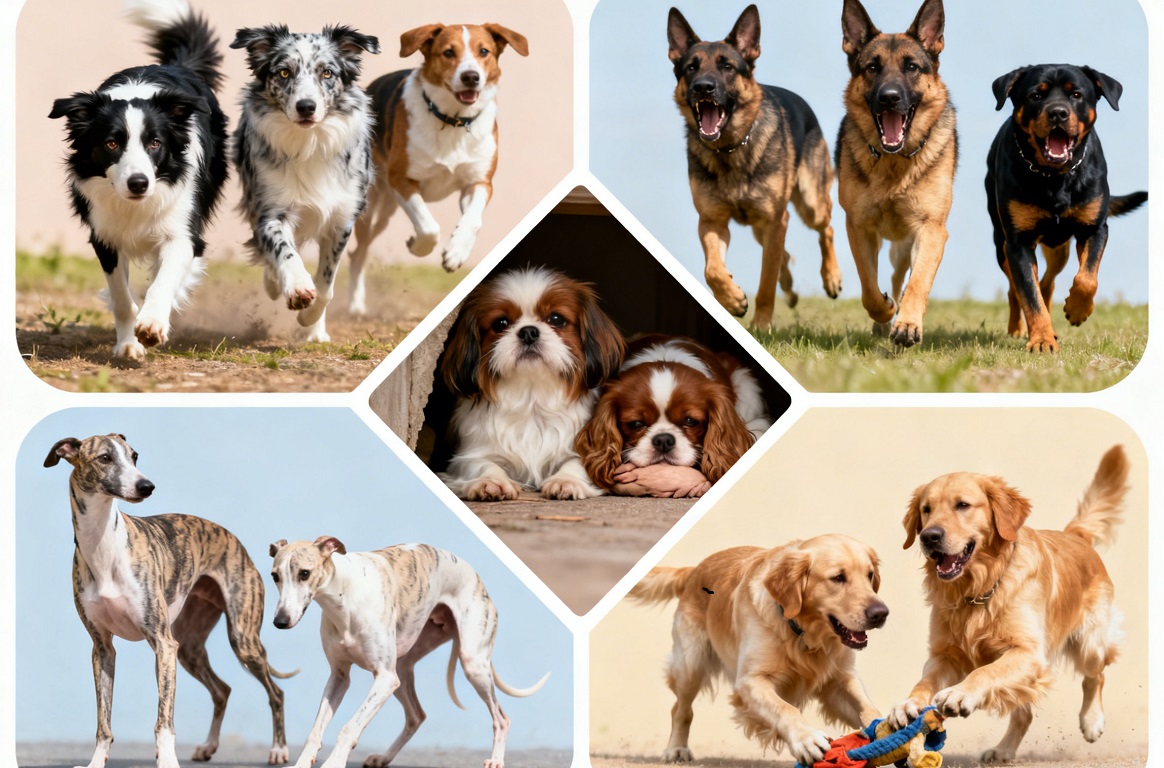
Different breeds have different stress triggers and calming needs
| Breed Group | Typical Stress Responses | Common Triggers | Calming Strategies | Special Considerations |
|---|---|---|---|---|
| Herding Breeds (Border Collies, Aussies) |
Hyper-vigilance, obsessive behaviors, nipping | Chaotic environments, lack of job, confinement | Mental stimulation, structured activities, clear jobs | Prone to neurotic behaviors if chronically stressed |
| Guardian Breeds (GSDs, Rottweilers) |
Barking, patrolling, protective stances | Strangers approaching, perceived threats | Confidence building, clear boundaries, socialization | Need to learn off-switch, prone to chronic vigilance |
| Companion Breeds (Shih Tzus, Cavaliers) |
Hiding, trembling, clinging, submissive urination | Loud noises, being alone, rough handling | Gentle handling, gradual independence training | Often babied, need confidence building |
| Sighthounds (Greyhounds, Whippets) |
Freezing, retreating, sensitivity to touch | Sudden movements, rough play, novel situations | Respect personal space, soft handling, predictable routine | Startle easily, need gentle introduction to new things |
| Working Breeds (Labs, Goldens) |
Destructive chewing, hyperactivity, attention-seeking | Boredom, lack of exercise, inconsistent rules | Regular exercise, job/task training, clear structure | Stress often manifests as "bad behavior" |
Medications & Supplements for Canine Anxiety
| Intervention Type | Common Options | Best Used For | Onset Time | Important Safety Notes |
|---|---|---|---|---|
| Prescription Medications | Fluoxetine, Clomipramine, Trazodone, Alprazolam | Severe anxiety, phobias, compulsive disorders | Days to weeks (SSRIs), 1-2 hours (benzos) | Veterinary prescription required, regular monitoring |
| Natural Supplements | L-theanine, CBD oil, melatonin, valerian root | Mild-moderate anxiety, situational stress | 30 minutes to several weeks | Quality varies, consult vet, watch for interactions |
| Pheromone Products | Adaptil collars, diffusers, sprays | Environmental anxiety, travel, new situations | Immediate to days (depends on delivery) | Safe, no side effects, works best with other methods |
| Dietary Approaches | Tryptophan-rich foods, omega-3s, calming diets | General anxiety, stress-related behaviors | Weeks for full effect | Part of holistic approach, not quick fix |
| Combination Therapy | Medication + behavior modification + supplements | Severe cases, multiple anxiety types | Varies by component | Most effective approach for difficult cases |
Stress Reduction Training Exercises
Foundation Exercises:
- Mat training: Go to mat = calm time with treats
- Relaxation protocol: Progressive duration of calm behavior
- Look at that game: See trigger = get treat (changes association)
- Hand targeting: Touch hand with nose = treat (builds focus)
- Leave it training: Builds impulse control, reduces frustration
Advanced Techniques:
- Behavioral adjustment training: Systematic desensitization
- Counter-conditioning: Change emotional response to triggers
- Pattern games: Predictable routines that build confidence
- Calmness capture: Reward naturally occurring calm moments
- Impulse control games: Building frustration tolerance
When to Seek Professional Help
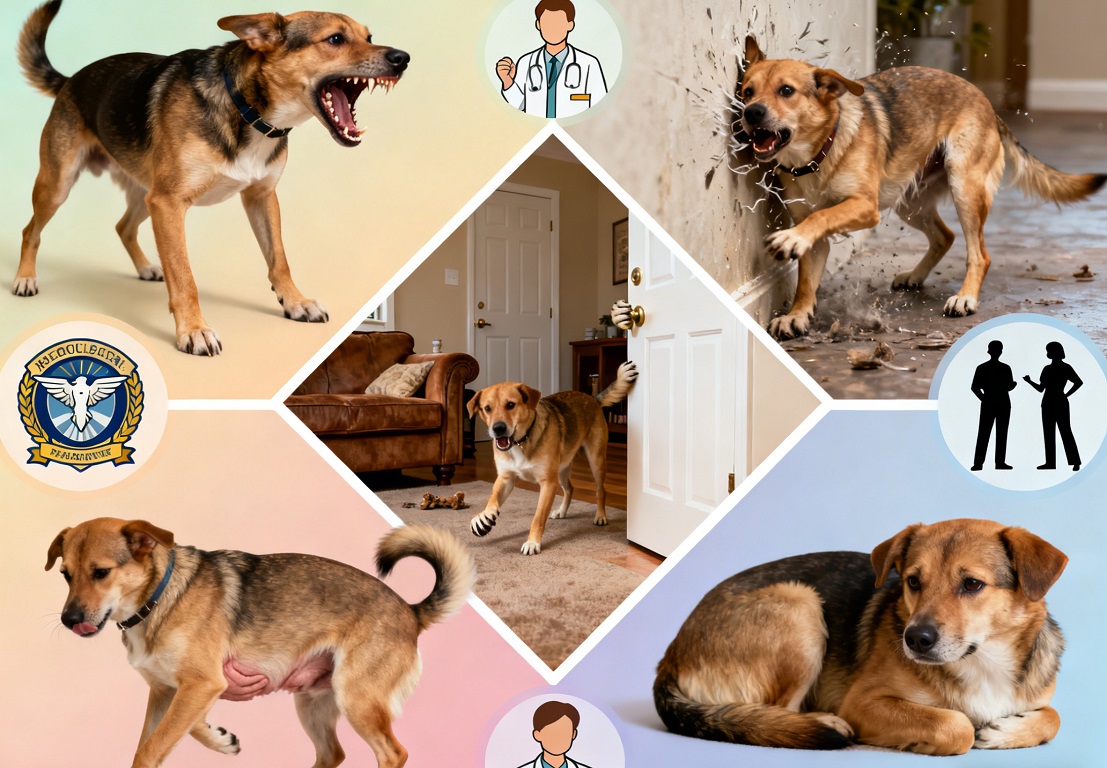
Professional guidance is invaluable for managing severe anxiety and stress disorders
| Situation | Red Flags | Professional to Consult | What to Expect | Average Time to Improvement |
|---|---|---|---|---|
| Aggression Issues | Growling, snapping, biting, stiffening | Veterinary Behaviorist or Certified Behavior Consultant | Behavior assessment, safety plan, modification program | 3-6 months with consistency |
| Severe Phobias | Panic attacks, self-injury, destruction attempting escape | Veterinary Behaviorist (may need medication) | Medical evaluation, desensitization plan, possible medication | 6-12 months for significant improvement |
| Separation Anxiety | Destruction, self-harm, constant distress when alone | Separation Anxiety Specialist or Certified Trainer | Gradual desensitization program, management strategies | 2-6 months depending on severity |
| Compulsive Disorders | Tail chasing, flank sucking, shadow chasing, excessive licking | Veterinary Behaviorist + Neurologist consultation | Medical workup, behavior modification, environmental changes | Variable - may require lifelong management |
| Generalized Anxiety | Constant vigilance, inability to relax, chronic digestive issues | Fear-Free Certified Veterinarian + Trainer | Holistic approach addressing environment, routine, training | 3-9 months for noticeable improvement |
Creating a Stress-Reduction Plan for Your Dog
Assessment Phase (Week 1-2):
- Identify triggers: Keep stress diary noting situations, responses
- Baseline behavior: Note normal vs. stressed behaviors
- Environmental audit: Identify stressors in home/routine
- Veterinary check: Rule out medical causes of behavior changes
- Set realistic goals: What improvement looks like for your dog
Implementation Phase (Week 3-8):
- Environmental changes: Create safe spaces, reduce triggers
- Training foundation: Start basic calmness exercises
- Management strategies: Prevent rehearsal of stressed behaviors
- Begin desensitization: If appropriate for your dog's issues
- Monitor progress: Adjust plan based on dog's response
Common Mistakes in Managing Canine Stress
What to Avoid:
- Punishing stress signals: Increases fear, damages trust
- Forcing exposure: Flooding often worsens anxiety
- Inconsistency: Mixed messages increase uncertainty
- Reinforcing fear: Excessive comforting can reward anxious behavior
- Ignoring subtle signals: Missing early warnings allows escalation
Better Alternatives:
- Respect communication: Acknowledge and respond to stress signals
- Gradual exposure: Systematic desensitization at dog's pace
- Clear, consistent rules: Predictability reduces anxiety
- Calm confidence: Model calm behavior without over-coddling
- Early intervention: Address at first signs, not after escalation
Conclusion: Building a Calmer, Happier Dog
Understanding and responding to your dog's stress signals is one of the most important skills you can develop as a pet owner. By learning to read canine body language, implementing effective calming strategies, and creating a secure environment, you can significantly reduce your dog's anxiety and improve their quality of life.
Remember that every dog is an individual—what stresses one dog may not bother another, and what calms one may not work for another. Be patient, observant, and willing to adjust your approach based on your dog's unique responses. With consistency, understanding, and appropriate interventions, most dogs can learn to cope with stressors more effectively and live happier, more relaxed lives.
"The goal isn't to eliminate all stress from a dog's life—that's impossible. The goal is to give them the tools to cope with inevitable stressors and to recognize when they need our help to feel safe again."
About the Author
Dr. Sarah Johnson, DVM, DACVB is a board-certified veterinary behaviorist with 15 years of experience specializing in canine anxiety disorders. She is the founder of the Canine Stress Reduction Clinic and has published numerous research papers on stress signaling and behavioral modification in dogs.
Disclaimer: This article is for informational and educational purposes only. It is not intended to substitute for professional veterinary advice, diagnosis, or treatment from a certified veterinarian or animal behaviorist. If your pet is experiencing severe health or behavioral issues, please consult a qualified professional promptly.