Complete Guide to Basic Dog Obedience Commands
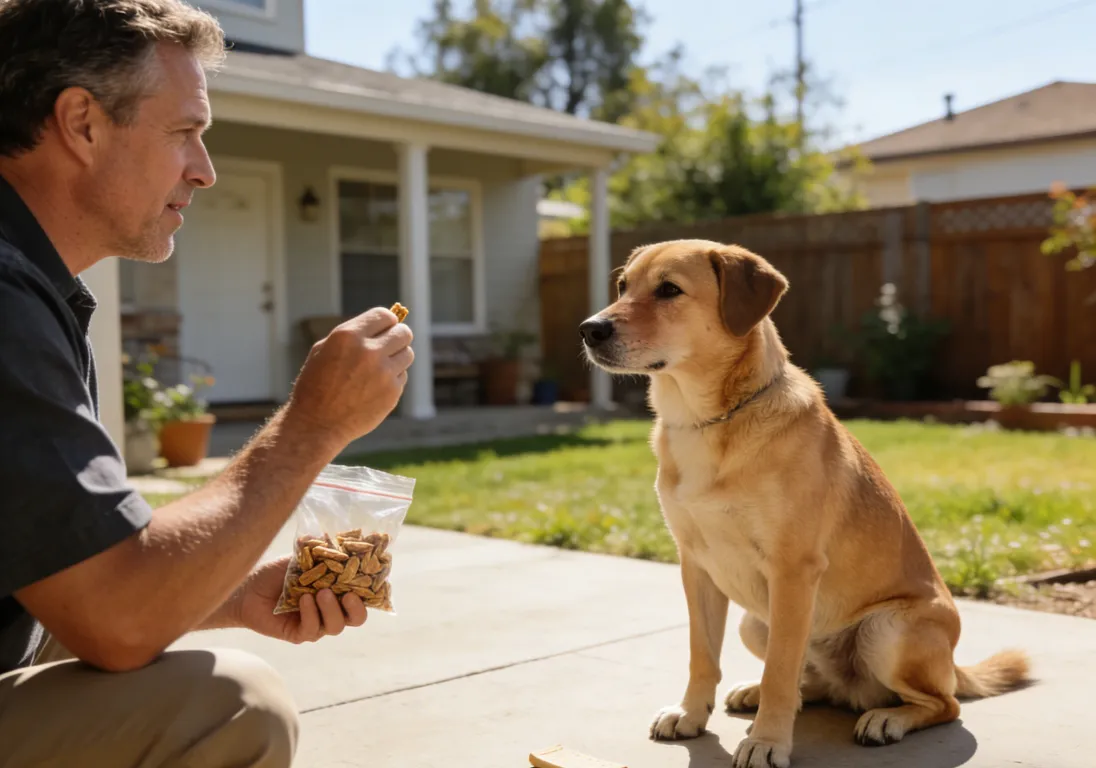
Proper obedience training creates a strong bond and ensures safety for both dog and owner
The Essential Guide to Teaching Your Dog Basic Obedience Commands
Mastering basic obedience commands is fundamental to building a strong, safe relationship with your dog. This comprehensive guide provides step-by-step training methods, troubleshooting tips, and practical applications for the seven essential commands every dog should know, creating a well-behaved companion you can trust in any situation.
"Obedience training isn't about dominance—it's about communication. When your dog understands what you're asking, you build trust, prevent problems, and create opportunities for more freedom and fun together."
— Michael Rodriguez, Certified Master Trainer
The 7 Essential Commands: What Every Dog Should Learn
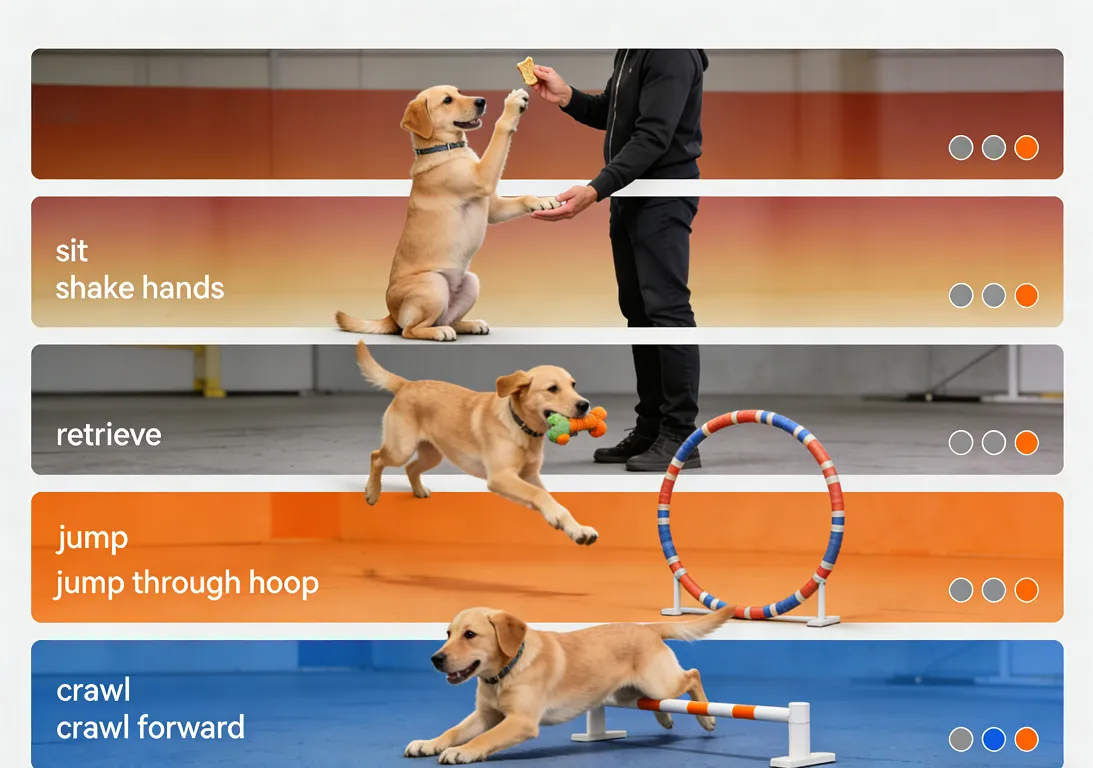
Consistent practice and positive reinforcement lead to reliable command responses
| Command | Primary Purpose | Safety Importance | Difficulty Level | Average Training Time |
|---|---|---|---|---|
| Sit | Foundation command, impulse control | Medium - prevents jumping, creates calmness | Easy | 1-3 days for basics |
| Stay | Self-control, safety in dangerous situations | High - prevents running into streets, etc. | Medium | 2-4 weeks to proof |
| Come/Recall | Emergency recall, off-leash freedom | Critical - life-saving command | Hard | 6-12 weeks to reliability |
| Down | Calm behavior, vet/grooming cooperation | Medium - prevents conflict, creates calm | Medium | 1-2 weeks |
| Leave It | Prevents picking up dangerous items | Critical - prevents poisoning/obstruction | Medium | 2-4 weeks to generalization |
| Drop It | Releases dangerous/valuable items | High - emergency item release | Medium | 1-3 weeks |
| Heel/Loose Leash | Pleasant walking, public safety | Medium - prevents pulling accidents | Medium-Hard | 4-8 weeks for consistency |
Training Methodology: Positive Reinforcement Techniques
Fundamental Training Principles:
Marker Training (Clicker/Verbal):
- Marker sound: Click or word ("yes!") marks exact desired behavior
- Timing: Must be within 1-2 seconds of behavior
- Reward delivery: Follow marker with treat within 3 seconds
- Charging the marker: Click-treat 10-20 times with no command first
- Advantages: Precise communication, faster learning
Luring vs. Capturing vs. Shaping:
- Luring: Guide with treat, fade lure quickly to hand signal
- Capturing: Mark and reward when dog offers behavior naturally
- Shaping: Reward successive approximations toward final behavior
- Best uses: Luring for simple behaviors, capturing for natural behaviors
- Shaping for: Complex behaviors, building duration/distance
Training Session Guidelines:
- Duration: 3-5 minutes max, 2-5 times daily
- Environment: Start in low-distraction area
- End positively: Always end with success, even if easy task
- Consistency: Same command words, same family participation
- Progression: Master in one environment before adding difficulty
Common Training Mistakes:
- Repeating commands (teaches ignoring)
- Moving too fast through difficulty levels
- Training when frustrated/tired
- Inconsistent criteria or rewards
- Not generalizing to different environments
Command #1: "Sit" - Step-by-Step Training Guide
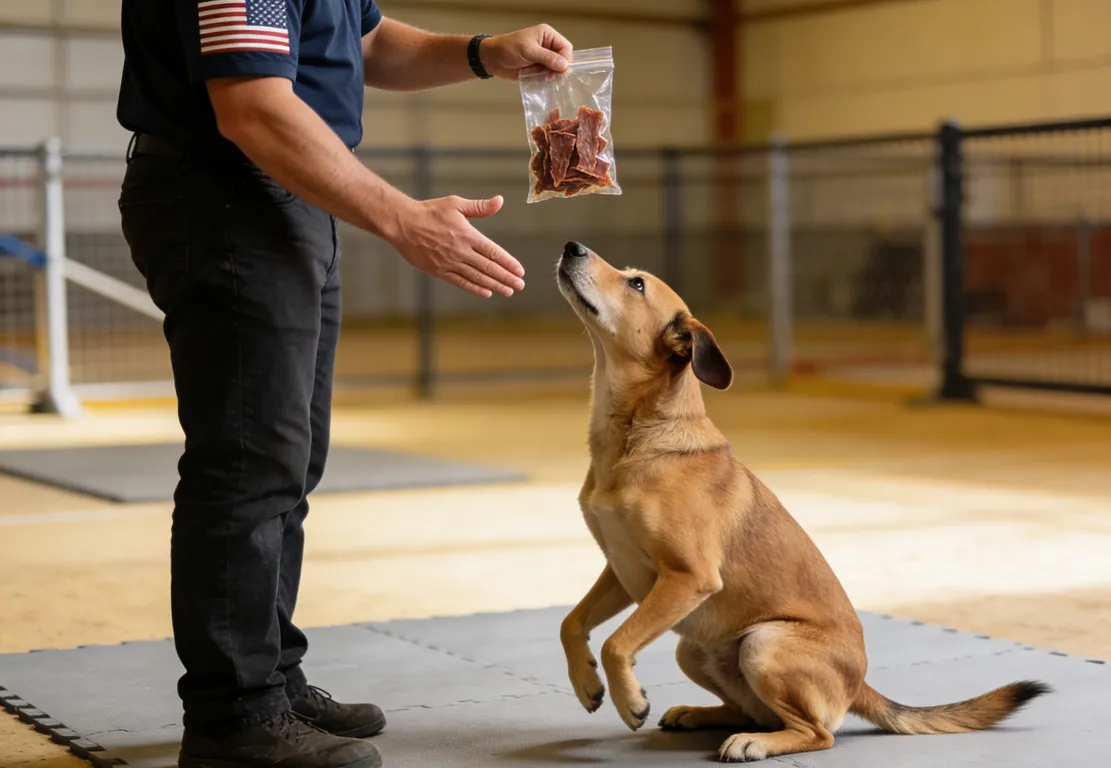
The 'sit' command is the foundation for all other obedience training
| Training Phase | Method | Duration/Reps | Success Criteria | Next Step |
|---|---|---|---|---|
| Phase 1: Luring | Hold treat at nose, move up and back, mark/reward when bottom touches floor | 10-15 reps, 2 sessions daily | Dog follows treat into sit position consistently | Begin fading food lure to hand signal |
| Phase 2: Adding Cue | Say "sit" as dog begins to sit, then mark/reward | 10 reps with cue, 5 without (capturing) | Dog responds to verbal cue 80% of time | Add hand signal (open palm upward movement) |
| Phase 3: Proofing | Practice in different locations, with mild distractions | 5-10 reps in 3-5 new locations | Reliable response in various environments | Increase distance between you and dog |
| Phase 4: Generalization | Different people give command, various positions relative to dog | Practice with all family members | 90% reliability in all situations | Begin adding duration (see "stay") |
Command #2: "Stay" - Building Duration, Distance, and Distraction
The Three D's of Stay Training:
- Duration: How long dog holds position
- Distance: How far you move away
- Distraction: What's happening around dog
- Golden rule: Only increase ONE "D" at a time
- Starting point: All D's at minimum, build gradually
Training Progression:
- Week 1: 3-second stays, no movement, no distractions
- Week 2: 10-second stays, 1 step back, quiet room
- Week 3: 30-second stays, across room, mild distractions
- Week 4: 1-minute stays, out of sight briefly, household activity
- Beyond: Build to 5+ minutes, various environments
Release Word Training:
- Choose release word: "Okay," "Free," "Break" - be consistent
- Method: Say release word, toss treat away from position
- Importance: Teaches dog to wait for permission to move
- Common mistake: Repeating "stay" - say it once only
- Advanced: Vary duration before release to prevent anticipation
- Troubleshooting breaking stay: Return to easier level, don't punish
- Body position: Stand still initially, later add movement
- Return to dog: Initially return to reward, later reward at distance
- Proofing: Practice with doorbells, dropped items, etc.
- Safety note: Never use stay as substitute for proper containment
Command #3: "Come/Recall" - The Life-Saving Command
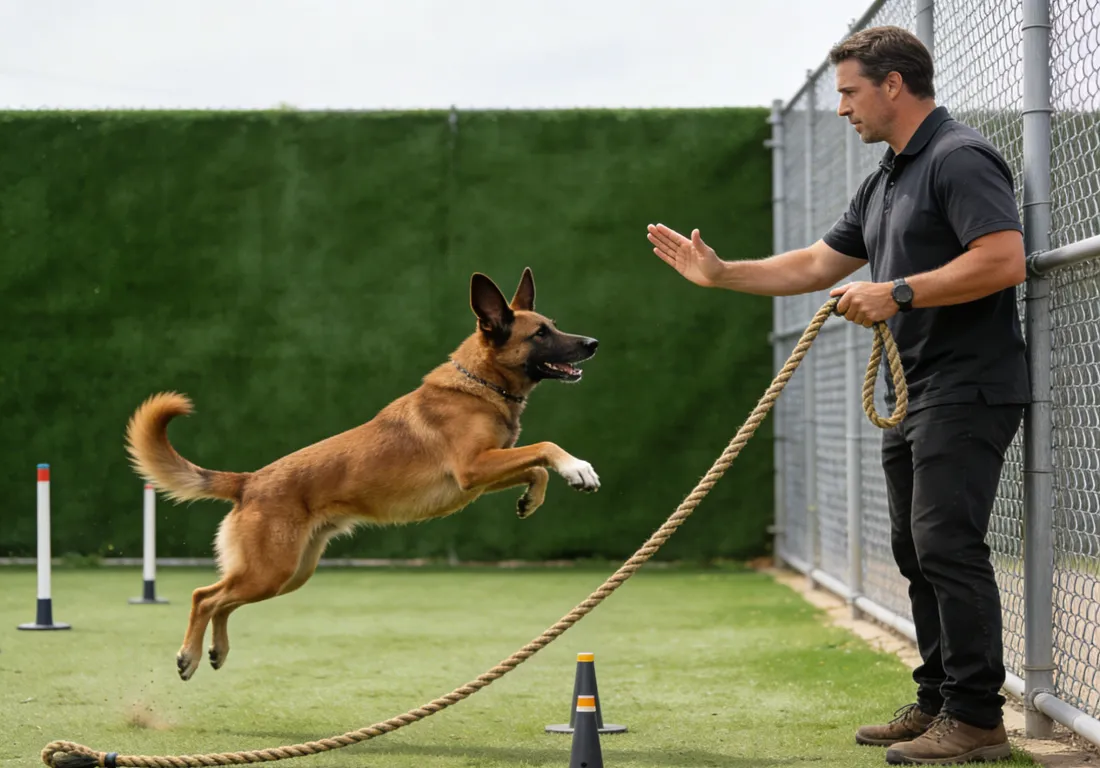
Reliable recall is essential for off-leash safety and emergency situations
| Training Stage | Environment & Setup | Method | Reward Quality | Common Pitfalls to Avoid |
|---|---|---|---|---|
| Foundation | Indoors, no distractions, 6-foot leash | Say "come!" cheerfully, reward when dog arrives | High-value (chicken, cheese, liver) | Calling for negative things (baths, nail trims) |
| Building Reliability | Long line (15-30 ft), fenced area, mild distractions | Practice when dog is somewhat distracted | Vary rewards - sometimes jackpot! | Repeating command, chasing dog |
| Adding Difficulty | Fenced park, other dogs at distance | Use long line for safety, practice recalls during play | Super high-value, play reward sometimes | Calling from play then ending fun immediately |
| Emergency Recall | All environments, special cue word ("Emergency!") | Different cue, always massive reward | Jackpot every time (handful of treats) | Using emergency cue for non-emergencies |
| Maintenance | Regular practice in various settings | Occasional high-value rewards, keep it fun | Variable reinforcement schedule | Assuming "trained" and stopping practice |
Command #4: "Leave It" - Preventing Dangerous Situations
Step-by-Step Training Method:
- Closed hand method: Treat in closed fist, dog may sniff/lick
- Mark and reward: When dog stops trying, mark and reward from other hand
- Add cue: Say "leave it" as dog looks away from fist
- Increase difficulty: Open hand slightly, treat on floor under foot
- Generalize: Different items, locations, distances
Real-World Applications:
- Street food: Practice with safe "trash" items on walks
- Other animals: Leave squirrels, cats, other dogs
- Children's toys: Leave kid items alone
- Household hazards: Electrical cords, chemicals (safe practice versions)
- Medications: Practice with empty pill bottles
Difference Between "Leave It" and "Drop It":
"Leave It":
- Preventative: Don't touch/take item
- Timing: Before dog has item
- Training method: Anticipation and self-control
- Use when: You see danger before dog does
- Example: Chicken bone on sidewalk ahead
"Drop It":
- Corrective: Release item already in mouth
- Timing: After dog has item
- Training method: Trade-up (higher value item)
- Use when: Dog already has dangerous item
- Example: Dog picks up chicken bone
Command #5: "Down" - Teaching Calm Behavior
| Training Method | Steps | Best For | Challenges | Solutions |
|---|---|---|---|---|
| Luring from Sit | From sit, treat at nose, straight down to floor, then out along floor | Most dogs, clear visual guidance | Dog stands up instead of lying down | Practice against wall, slower lure movement |
| Capturing | Mark/reward when dog lies down naturally, add cue as behavior happens | Dogs who down frequently naturally | Inconsistent opportunities | Have treats ready during calm times |
| Shaping | Reward any downward movement, then require more each time | Stubborn dogs, building confidence | Slow progression, requires patience | Keep sessions very short, celebrate small steps |
| Hand Target | Teach touch to hand first, then move hand to floor position | Dogs who love targeting games | May pop up quickly after down | Add duration before marker/reward |
Command #6: "Heel/Loose Leash Walking" - Enjoyable Walks
Traditional Heel vs. Loose Leash Walking:
- Heel: Precise position at left side, attention on handler
- Loose leash: No tension on leash, anywhere in radius
- Heel use: Crowded areas, passing distractions, formal settings
- Loose leash use: Most walks, sniffing allowed, relaxation
- Training both: Teach loose leash first, then heel as separate skill
Loose Leash Training Method:
- Stand still: When leash tightens, stop moving immediately
- Reward position: Mark/reward when leash is loose
- Change direction: Random turns when dog pulls ahead
- Be a tree: No forward motion while pulling
- High rate of reinforcement: Reward frequently at first
Equipment Considerations:
Recommended for Training:
- Front-clip harness: Reduces pulling leverage
- Standard 6-foot leash: No retractable leashes
- Treat pouch: For easy reward access
- Flat collar or martingale: For dogs who don't pull excessively
Not Recommended:
- Prong/pinch collars: Can cause injury, fear
- Choke chains: Risk of tracheal damage
- Retractable leashes: Teach constant tension, safety issues
- Any equipment that causes pain/fear
Troubleshooting Common Training Challenges
| Problem | Possible Causes | Immediate Solutions | Long-term Strategies | When to Seek Help |
|---|---|---|---|---|
| Dog Won't Respond to Known Commands | Distractions too high, insufficient proofing, health issues | Return to easier environment, higher-value rewards | Systematic proofing in various environments | Sudden change in responsiveness (vet check needed) |
| Slow Progress/Slow Learner | Training methods mismatch, sessions too long, unclear criteria | Shorter sessions, clearer communication, try different methods | Break behaviors into smaller steps, more frequent short sessions | No progress after 2 weeks of consistent correct training |
| Selective Listening/Choosing to Ignore | Inconsistent reinforcement, commands used too frequently | Ensure commands are followed through, use leash if needed | Variable reward schedule, higher-value rewards for compliance | Willful disobedience in safety-critical situations |
| Fear/Anxiety During Training | Too much pressure, past negative experiences, sensitive temperament | Lower criteria, more rewards, shorter sessions | Build confidence through easy successes, consult behaviorist | Trembling, hiding, submissive urination during training |
| Family Inconsistency | Different commands, rules, reinforcement schedules | Family training meeting, written guidelines | Train together initially, create command/reward chart | Dog confused despite family efforts to be consistent |
Advanced Training: Building on Basics
Adding Complexity to Basics:
- Combination commands: "Sit-stay-come" sequences
- Increased criteria: Faster responses, longer durations
- Environmental challenges: Around other animals, in public places
- Distance work: Commands from across room/yard
- Handler movement: Commands while you're walking/turning
Next-Level Commands:
- Place/Bed: Go to specific mat/bed and stay
- Wait: Pause at doors/gates/curbs
- Touch/Target: Touch hand or target stick
- Find It: Nosework/search games
- Middle: Stand between your legs
Maintaining Training Long-Term:
- Incorporate into daily life: Practice during routine activities
- Variable reinforcement: Random high-value rewards for excellent responses
- Refresher sessions: Brief practice of all commands weekly
- Keep it fun: Training games, new challenges
- Annual "tune-up": Formal refresher course if needed
When to Consider Professional Help:
- No progress after consistent effort
- Aggression/fear during training
- Specific behavior problems interfering
- Preparing for competition/special work
- Wanting accelerated progress with expert guidance
Training Tools and Equipment Guide
Essential Training Tools:
- Treat pouch: Hands-free reward access
- High-value treats: Small, soft, smelly (cheese, chicken, liver)
- Clicker (optional): Precise marking tool
- Standard 6-foot leash: For control during training
- Long line (15-30 ft): For recall training in open spaces
Helpful Accessories:
- Target stick: For precision positioning
- Training mat/bed: For "place" command
- Puzzle toys: For mental stimulation between sessions
- Training journal: Track progress, note challenges
- Video camera: Record sessions for self-review
What to Avoid:
- Aversive tools (prong, shock, choke collars)
- Physical punishment of any kind
- Yelling or angry corrections
- Training when frustrated or tired
- Expecting too much too soon
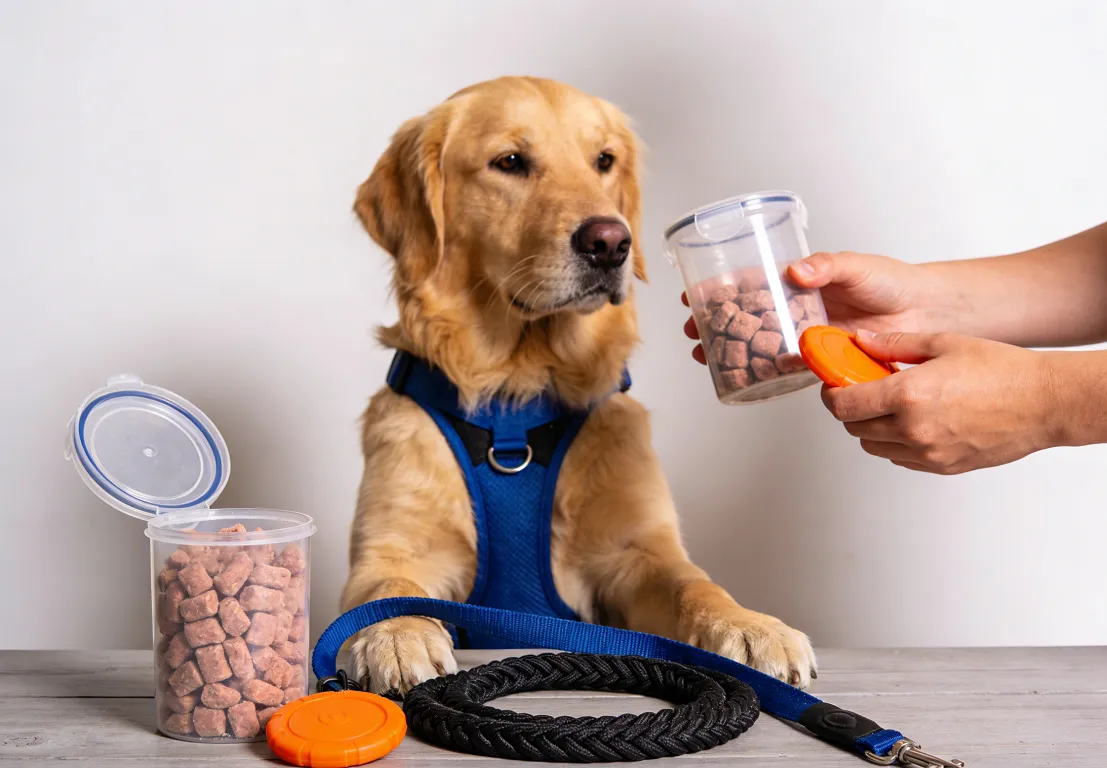
Proper training tools make the learning process easier and more effective for both dog and owner
Conclusion: Building a Lifelong Training Partnership
Basic obedience training is the foundation for a lifetime of clear communication and mutual understanding with your dog. These seven essential commands provide the framework for safety, good manners, and the freedom to include your dog in more aspects of your life. Remember that training is an ongoing conversation, not a one-time project.
The most successful training relationships are built on patience, consistency, and positive reinforcement. Celebrate small victories, be patient with setbacks, and always end training sessions on a positive note. The time and effort you invest in teaching these basic commands will pay dividends in safety, companionship, and the deep bond you'll share with your well-trained canine partner.
"A trained dog is a free dog. Every command mastered is another opportunity for adventure, another door that opens to include your canine companion in your world."
About the Author
Robert Chen, CPDT-KA, KPA-CTP is a certified professional dog trainer with 15 years of experience specializing in positive reinforcement methods. He has trained over 2,000 dogs in basic obedience and advanced skills, and developed curriculum for obedience classes taught at animal shelters and training centers nationwide.